Euphydryas anicia anicia
Anicia checkerspot, Variable checkerspot
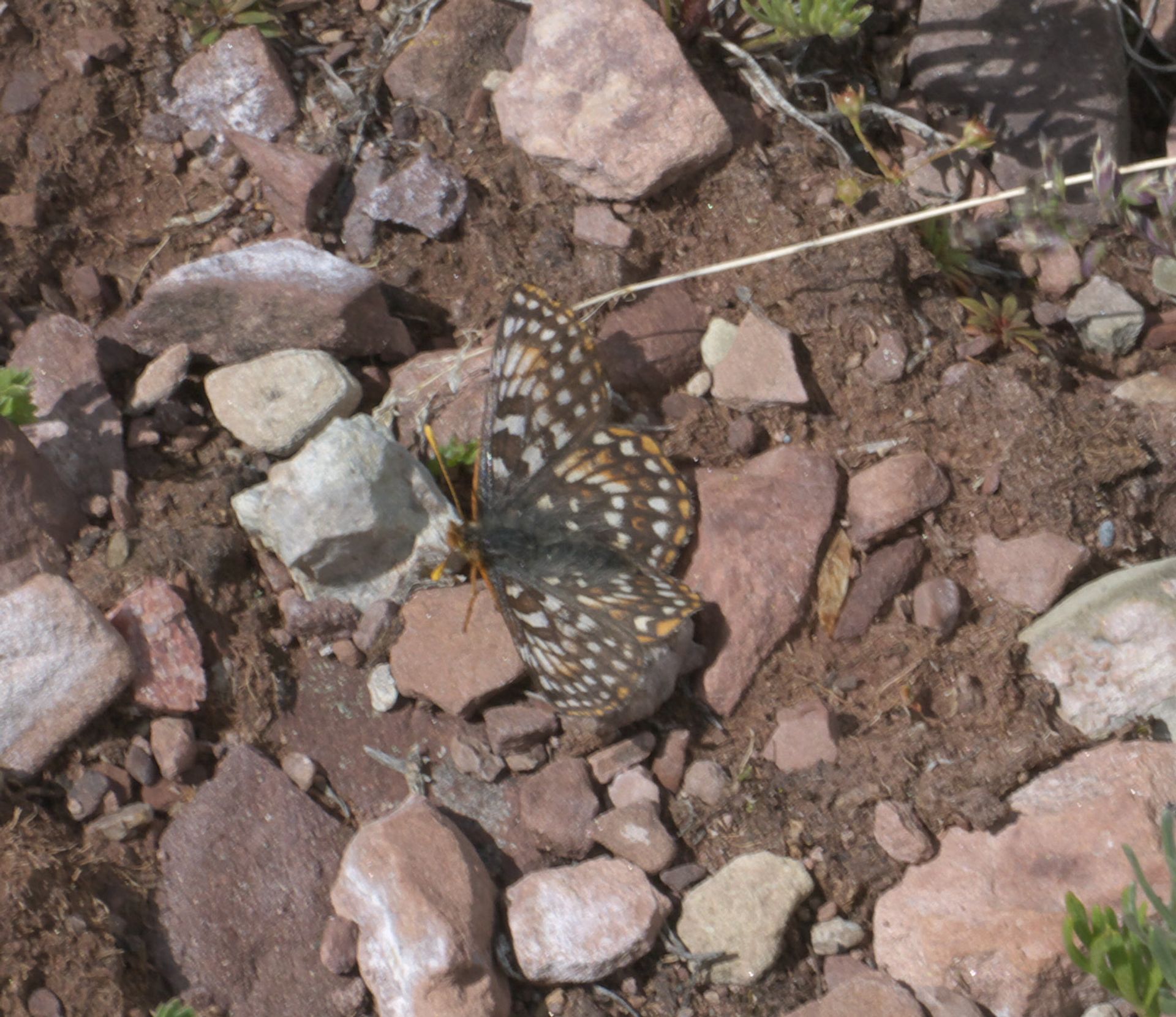
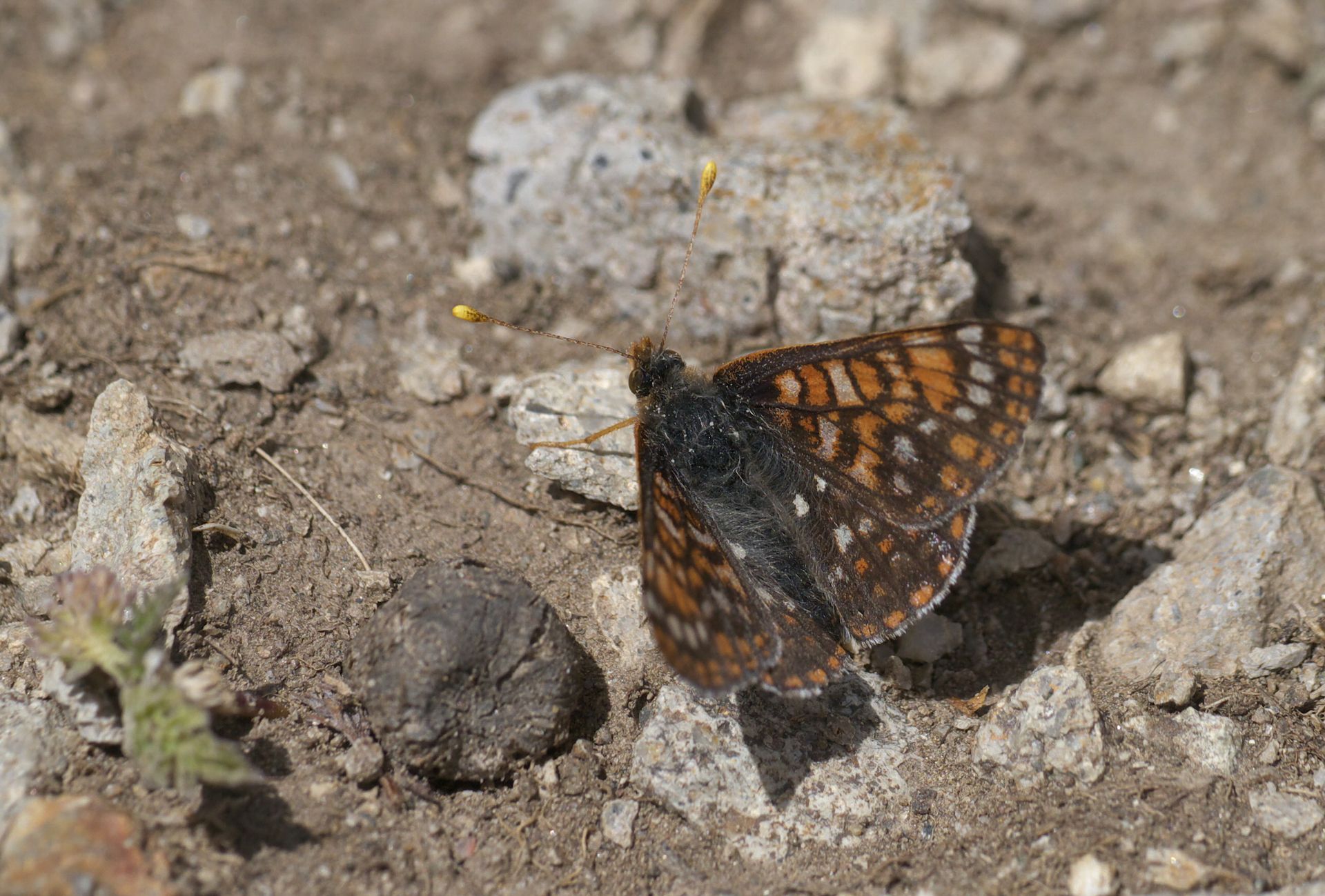
Euphydryas anicia anicia is a of checkerspot in the Nymphalidae. studied at Cumberland Pass, Colorado (elevation 3700 m) numbered 50,000–100,000 individuals, the largest recorded in 19 years of Euphydryas population studies. sequester iridoid glycosides from plants including Castilleja and Besseya . Movement distances between recapture events averaged less than 100 meters, though greater than most Euphydryas populations and comparable to more vagile E. chalcedona and E. editha populations.
Pronunciation
How to pronounce Euphydryas anicia anicia: /juːˈfaɪdrɪəs əˈnɪʃə əˈnɪʃə/
These audio files are automatically generated. While they are not always 100% accurate, they are a good starting point.
Images
Habitat
Alpine and subalpine environments. Documented at Cumberland Pass, Colorado at elevation 3700 m. Associated with plants Castilleja and Besseya in montane meadows.
Distribution
Gunnison County, Colorado. The nominate E. a. anicia occurs in the southern Rocky Mountains.
Host Associations
- Castilleja integra - larval Iridoid glycoside source; sequesters catalpol and macfadienoside
- Besseya alpina - larval Iridoid glycoside source; sequesters catalpol and aucubin
- Besseya plantaginea - larval Iridoid glycoside source; sequesters catalpol and macfadienoside
Behavior
exhibit movement patterns with greater vagility than most Euphydryas , with individuals often moving long distances between recapture events. Sex and individual variation occurs in plant utilization and iridoid glycoside . Catalpol is sequestered as a major compound despite being a minor constituent in host plants.
Similar Taxa
- Euphydryas chalcedonaSimilar movement patterns and vagility; used as comparative reference in studies
- Euphydryas edithaSimilar movement patterns in more vagile ; used as comparative reference in population studies
- Euphydryas anicia cloudcroftiAnother of E. anicia, distinguished by geographic separation in Sacramento Mountains of New Mexico and proposed endangered status
More Details
Population genetics
Gene frequencies at nine loci were determined from 1974–1977, showing genetic differences between years and between this and other alpine E. anicia . E. anicia appears to show less genetic differentiation than E. editha or E. chalcedona.
Chemical ecology
Larvae sequester iridoid glycosides from plants as chemical defenses. Catalpol, a major sequestered compound, is paradoxically a minor constituent in host plants, suggesting active selection or metabolic conversion.
Sources and further reading
- BugGuide
- GBIF taxonomy match
- iNaturalist taxon
- 'Climate Change' May Be a Key Factor in Declining Butterfly Populations | Bug Squad
- Mantispidae | Beetles In The Bush
- July | 2024 | Beetles In The Bush
- Bug Eric: Blodgett Peak Bioblitz Report
- Provisional checklist of European butterfly larval foodplants
- Conservation Translocations: It’s Not Just Beavers - Buglife Blog - Buglife
- Mating Behavior and Male Investment in Euphydryas anicia (Lepidoptera: Nymphalidae)
- The ecology and population genetics of an alpine checkerspot butterfly, Euphydryas anicia
- Euphydryas anicia (Lepidoptera: Nymphalidae) utilization of iridoid glycosides fromCastilleja andBesseya (Scrophulariaceae) host plants
- Host Plant Suitability in a Specialist Herbivore, Euphydryas anicia (Nymphalidae): Preference, Performance and Sequestration
- Influence of host-plant density and male harassment on the distribution of female Euphydryas anicia (Nymphalidae)
- Observations of late instar larva survival of Cotesia (Hymenoptera: Braconidae) parasitoid attack of Euphydryas anicia cloudcrofti (Lepidoptera: Nymphalidae)