
Chlosyne damoetas
(Skinner, 1902)
Rockslide Checkerspot
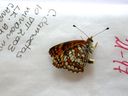
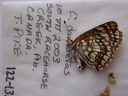
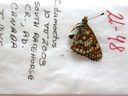
Chlosyne damoetas, commonly known as the Rockslide Checkerspot, is a in the Nymphalidae. It is native to western North America, where it inhabits rocky and montane environments. The species was originally described by Skinner in 1902 under the basionym Melitaea damoetas.
Pronunciation
How to pronounce Chlosyne damoetas: /kloʊˈsaɪni dəˈmoʊətəs/
These audio files are automatically generated. While they are not always 100% accurate, they are a good starting point.
Identification
Distinguished from similar Chlosyne by its association with rockslide and rocky montane . The 'Rockslide Checkerspot' reflects this habitat specificity, which serves as a key diagnostic feature separating it from related checkerspots.
Images
Habitat
Rocky areas and rockslides in montane regions.
Distribution
Western North America.
Similar Taxa
- Chlosyne pallaSimilar checkerspot patterning and geographic overlap in western North America; C. palla (northern checkerspot) has broader distribution from southern British Columbia to California, Utah, and Colorado.
- Chlosyne laciniaSame with similar checkerspot wing patterns; C. lacinia (bordered patch) has different preferences and distribution.