
Junonia stemosa
Grishin, 2020
twintip buckeye
Junonia stemosa, the twintip buckeye, is a described in 2020 following genomic revision of North American Junonia. It is to southern Texas, particularly coastal barrier islands, where it specializes on Stemodia tomentosa as its exclusive larval plant. The species maintains genetic integrity despite occurring in sympatry with related buckeyes, and its distribution is tightly linked to the patchy occurrence of its host plant in sandy coastal .
Pronunciation
How to pronounce Junonia stemosa: //dʒuːˈnoʊniə stɛˈmoʊsə//
These audio files are automatically generated. While they are not always 100% accurate, they are a good starting point.
Identification
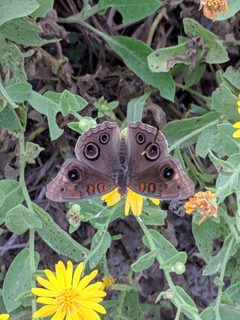
Distinguished from Junonia coenia by more angular, elongated forewing apex and darker coloration with reduced orange. Subtle purplish or bluish sheen and purple sheen on fresh also aid separation. From Junonia nigrosuffusa, distinguished by morphological and ecological traits including plant association. Genomic differences confirm status. eyespots more clearly defined than in some .
Images
Habitat
Open coastal prairies, sandy flats, and meadow systems in southern Texas. dominated by larval plant Stemodia tomentosa, which thrives in dry, sandy coastal soils. Often found on barrier islands such as South Padre Island.
Distribution
to southern Texas, USA. Restricted to Gulf Coast region and barrier islands, particularly South Padre Island. Distribution limited by patchy occurrence of plant Stemodia tomentosa.
Diet
Larvae feed exclusively on Stemodia tomentosa (woolly stemodia), a light gray herb. This specialization is ecologically significant: the dense of S. tomentosa prevents feeding by Junonia coenia larvae, which refuse the plant and die. likely nectar on available flowers, though specific records are not detailed.
Host Associations
- Stemodia tomentosa - larval plantExclusive ; dense excludes
Life Cycle
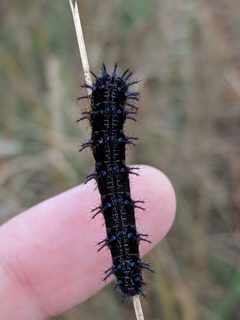
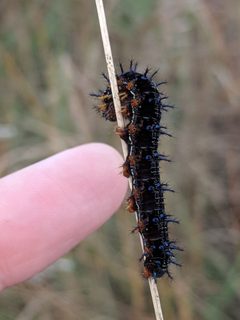
hatch after approximately three days. Five larval instars. in mottled, cryptic pupae on plant. Multiple per year possible given year-round persistence of host plant.
Behavior
exhibit visually mediated mating preferences, with dark-winged individuals preferentially courting similarly patterned mates. remain stable through winter due to year-round persistence of plant, unlike dependent on seasonally declining hosts.
Ecological Role
herbivore tightly linked to coastal prairie . plant specialization contributes to divergence and maintenance of genetic boundaries in sympatry with related buckeyes.
Similar Taxa
- Junonia coeniaClosely related and sympatric; distinguished by more angular forewing apex, darker coloration with reduced orange, and inability to use Stemodia tomentosa as
- Junonia nigrosuffusaMorphologically similar and historically confused with J. stemosa; distinguished by genomic differences and plant ; J. nigrosuffusa may represent hybrid involving ancestral J. stemosa lineage
Misconceptions
Earlier authors frequently treated now assigned to J. stemosa as part of J. nigrosuffusa or as melanistic forms of J. coenia. Whole- comparisons revealed consistent divergence in speciation proteins, supporting recognition as distinct .
Sources and further reading
- BugGuide
- Wikipedia
- GBIF taxonomy match
- iNaturalist taxon
- NCBI Taxonomy
- A 'Firecracker of a Surprise' in Davis: Who Knew? | Bug Squad
- A Close Call | Bug Squad
- Mary Louise Flint's Article in The Acorn: 'Butterflies in Decline' | Bug Squad
- What do insects do in winter? Migrants in the DMV: Common Buckeye, Junonia coenia, Variegated Fritillary, Euptoieta Claudia, Painted Lady, Vanessa cardui, Large Milkweed bug, Oncopeltus fasciatus — Bug of the Week
- 🪲 Entomologizing w/ the WGNSS Entomology Group at Hughes Mountain Natural Area — 11 Oct 2025 | Beetles In The Bush
- Butterfly Color Patterns Reveal Clues About Genes That Build Insect Wings