
Junonia nigrosuffusa
Barnes & McDunnough, 1916
Dark Buckeye
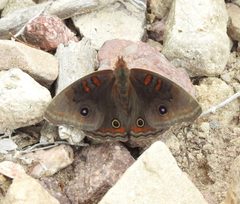
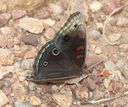
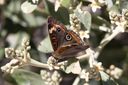
Junonia nigrosuffusa, the dark buckeye, is a in the Nymphalidae. It was elevated from status (formerly Junonia coenia nigrosuffusa) to full species rank based on phylogenetic and research, alongside Junonia zonalis. This taxonomic revision restricted the range of the related tropical buckeye (Junonia evarete) primarily to South America. The dark buckeye is found in the southwestern United States and Mexico.
Pronunciation
How to pronounce Junonia nigrosuffusa: /juːˈnoʊniə nɪˌɡroʊsəˈfjuːsə/
These audio files are automatically generated. While they are not always 100% accurate, they are a good starting point.
Identification
Distinguished from the common buckeye (Junonia coenia) and tropical buckeye (Junonia evarete) by darker overall coloration, particularly in the suffused dark areas of the wings. The specific epithet "nigrosuffusa" refers to this dark suffusion. Accurate identification often requires examination of wing pattern details and geographic location, as the was historically confused with closely related Junonia before molecular studies clarified its status.
Images
Distribution
Southwestern United States and Mexico.
Similar Taxa
- Junonia coeniaThe common buckeye overlaps in range and was formerly considered ; differs in having less dark suffusion on wings and more northerly and easterly distribution in North America.
- Junonia evareteThe tropical buckeye was formerly considered ; now restricted primarily to South America due to taxonomic revision that elevated J. nigrosuffusa to rank.
- Junonia zonalisElevated to rank in the same taxonomic revision based on phylogenetic and evidence; also formerly a of J. evarete.
Sources and further reading
- BugGuide
- Wikipedia
- GBIF taxonomy match
- iNaturalist taxon
- NCBI Taxonomy
- Catalogue of Life
- A 'Firecracker of a Surprise' in Davis: Who Knew? | Bug Squad
- A Close Call | Bug Squad
- Mary Louise Flint's Article in The Acorn: 'Butterflies in Decline' | Bug Squad
- What do insects do in winter? Migrants in the DMV: Common Buckeye, Junonia coenia, Variegated Fritillary, Euptoieta Claudia, Painted Lady, Vanessa cardui, Large Milkweed bug, Oncopeltus fasciatus — Bug of the Week
- 🪲 Entomologizing w/ the WGNSS Entomology Group at Hughes Mountain Natural Area — 11 Oct 2025 | Beetles In The Bush
- Butterfly Color Patterns Reveal Clues About Genes That Build Insect Wings