
Satyrium kingi
(Klots & Clench, 1952)
King's Hairstreak
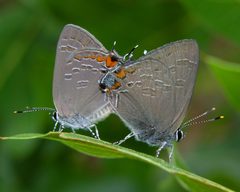
Satyrium kingi, known as King's , is a North American in the Lycaenidae. It was described by Klots and Clench in 1952. The species is part of the hairstreak group, characterized by small tail-like projections on the hindwings. Basic information about its and remains limited in published sources.
Pronunciation
How to pronounce Satyrium kingi: //səˈtɪriəm ˈkɪŋɡaɪ//
These audio files are automatically generated. While they are not always 100% accurate, they are a good starting point.
Identification
As a Satyrium , S. kingi likely possesses the characteristic tail-like projection on the hindwing typical of the . Accurate identification requires examination of wing pattern details, particularly the arrangement of spots and bands on the surface. The is distinguished from similar hairstreaks by specific wing markings and geographic range. Specimens should be compared with related species such as Satyrium favonius and Satyrium edwardsii.
Images
Distribution
North America. Specific range details beyond continental occurrence are not well documented in available sources.
Similar Taxa
- Satyrium favoniusBoth are North American oak-associated hairstreaks in the same , sharing similar wing and preferences. Distinguished by specific wing pattern elements and geographic distribution.
- Satyrium edwardsiiAnother congeneric with overlapping range and similar size. Edwards' Hairstreak differs in plant associations and specific wing markings.
- Strymon melinusFormerly classified in Satyrium; similar overall appearance but now placed in a different . Gray Hairstreak has more widespread distribution and distinct wing pattern.
More Details
Taxonomic Note
GBIF lists Satyrium kingi as a synonym of Strymon kingi, while NCBI and other sources maintain it in Satyrium. This reflects ongoing taxonomic discussion about generic placement within the Lycaenidae.
MONA/Hodges Number
4284