
Satyrium edwardsii
(Grote & Robinson, 1867)
Edwards' Hairstreak
Satyrium edwardsii, the Edwards' , is a in the Lycaenidae. It occurs in eastern North America from the United States into southern Canada. Larvae feed on Quercus , particularly scrub oak (Q. ilicifolia). The species has been documented as endangered in some regions and exhibits myrmecophilous associations with ants.
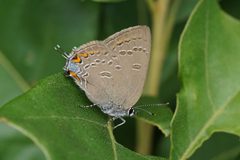
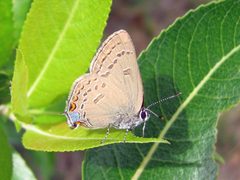
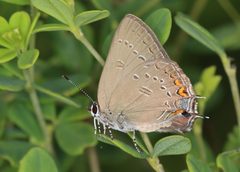
Pronunciation
How to pronounce Satyrium edwardsii: //səˈtɪə.ri.əm ɛdˈwɔːrdz.i.aɪ//
These audio files are automatically generated. While they are not always 100% accurate, they are a good starting point.
Images
Habitat
Found in oak-dominated , particularly areas with scrub oak (Quercus ilicifolia). Occupies lower and middle vertical strata of forest vegetation, in contrast to -dwelling relatives. Occurs in prairie-woodland transition zones and open oak barrens.
Distribution
Eastern United States and southern Canada, from Saskatchewan east to Quebec. Documented from Manitoba, Vermont, and throughout the core eastern range.
Diet
Larvae feed on Quercus , specifically documented on Q. ilicifolia (scrub oak). feeding habits not explicitly documented for this species; related Satyrium species utilize non-nectar sources including honeydew and gall exudates.
Host Associations
- Quercus ilicifolia - larval food plantscrub oak
- Quercus - larval food plantoak generally
Life Cycle
Larvae have documented mutualistic relationships with ants (myrmecophily), providing honeydew secretions in exchange for protection from and . Caterpillars retreat into galleries when disturbed or during temperature extremes.
Behavior
remain near ground level when disturbed, in contrast to -ascending observed in related . Larvae associate with colonies, utilizing galleries for shelter.
Ecological Role
Larval stage functions as herbivore on oaks; participates in mutualistic relationships with ants, contributing to complexity in oak .
Human Relevance
Listed as endangered in some jurisdictions. Subject of conservation concern due to specificity and association with declining oak barren . One documented occurs at Adams Lake, Ohio.
Similar Taxa
- Satyrium favonius ontarioNorthern Oak Hairstreak; differs in occupying of taller oaks (post oak, white oak) versus lower strata of scrub oak used by S. edwardsii
- Satyrium semilunaHalf-moon Hairstreak; western with different plant associations and geographic range
- Satyrium curiosolusCuriously Isolated ; restricted to single alluvial fan in Alberta with exclusive lupine plant association, genetically and ecologically distinct
More Details
Myrmecophily
Documented mutualistic relationship with ants, where larvae provide sugary secretions and receive protection and shelter. Described in Webster & Nielsen (1984).
Conservation Status
Considered endangered in some portions of range; perceived rarity may reflect specificity and under-detection rather than true scarcity in suitable oak barren habitats.