
Eumaeus
Hübner, 1819
Cycadians
Species Guides
1- Eumaeus atala(Atala)
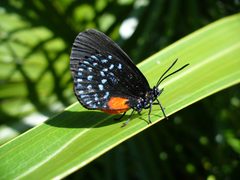
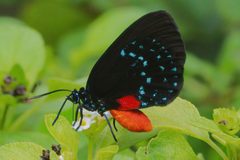
Eumaeus is a of lycaenid butterflies commonly known as cycadians, characterized by their striking coloration and obligate association with cycad plants. Members of this genus are herbivores that sequester neurotoxic compounds from their hosts, rendering them chemically defended against . Several have experienced severe declines due to overharvesting and destruction of their cycad hosts, followed by remarkable recoveries linked to urban ornamental plantings. The genus represents a notable example of reconciliation , where conservation success has been achieved through human-modified landscapes.
Pronunciation
How to pronounce Eumaeus: /juːˈmiːəs/
These audio files are automatically generated. While they are not always 100% accurate, they are a good starting point.
Images
Habitat
Natural include pine rocklands and tropical hammocks where native cycads occur; increasingly found in urban and suburban landscapes where ornamental cycads have been planted.
Distribution
Americas; documented from southeastern United States through tropical regions of the Americas. Eumaeus atala occurs in eastern North America with current stronghold in southeast Florida.
Host Associations
- cycads (Zamia spp., Dioon spp.) - obligate larval plantLarvae feed exclusively on cycad leaves; sequester cycasin and related azoglucoside compounds for chemical defense
Behavior
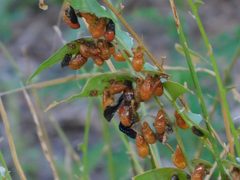
Larvae sequester neurotoxic compounds from plants and are protected by aposematic coloration; caterpillars may move to non-host plants nearby after feeding to pupate, possibly to avoid and searching coontie foliage.
Ecological Role
Serves as a flagship for urban conservation; demonstrates potential for reconciliation where threatened species persist and reproduce in human-modified environments.
Human Relevance
of E. atala have recovered from near-extinction due to widespread planting of coontie as an ornamental landscape plant; occasionally considered a pest in gardens and ornamental nurseries where larvae defoliate expensive cycad plantings.
Sources and further reading
- BugGuide
- Wikipedia
- iNaturalist taxon
- NCBI Taxonomy
- Catalogue of Life
- Coontie and the Atala butterfly, Eumaeus atala — Bug of the Week
- Destination Coral Gables, Florida: A visit with Coontie and the Atala butterfly, Eumaeus atala — Bug of the Week
- Eumaeus-atala - Entomology Today
- A Nearly Extinct Butterfly Makes a Comeback in South Florida
- Bug of the Week Academy Awards 2018 — Bug of the Week
- Destination Lizard Island, Australia, and a visit with Green Tree Ants, Oecophylla smaragdina — Bug of the Week
- Atala, Atala Hairstreak, Coontie Hairstreak, Eumaeus atala Röber (Insecta: Lepidoptera: Lycaenidae)
- Effectiveness of the aposematic Eumaeus childrenae caterpillars against invertebrate predators under field conditions
- Tales of urban conservation: Eumaeus butterflies and their threatened cycad hostplants