
Celastrina lucia
(Kirby, 1837)
lucia azure, northern azure, eastern spring azure, northern spring azure
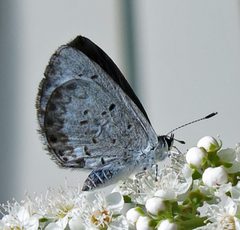
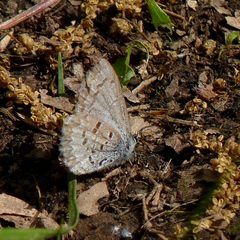
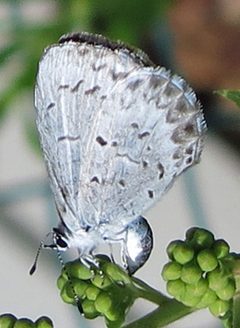
Celastrina lucia is a small in the Lycaenidae, commonly known as the northern azure or eastern spring azure. It was historically treated as a of C. ladon until taxonomic research in the 1990s established it as a distinct . The butterfly occurs in eastern North America from the Maritimes south through the Appalachian Mountains to West Virginia. are sexually dimorphic and active from April to July.
Pronunciation
How to pronounce Celastrina lucia: //sɛˈlæs.trɪ.nə ˈluː.si.ə//
These audio files are automatically generated. While they are not always 100% accurate, they are a good starting point.
Identification
Distinguished from similar azure by geographic range and period. Overlaps with C. ladon (spring azure), C. serotina (cherry gall azure), C. idella (holly azure), and C. neglecta (summer azure). Precise identification often requires examination of genitalia or association with specific plants. C. lucia is among the earliest-flying azures in its range, with peak activity in April and May.
Images
Appearance
Wingspan 22–35 mm. are sexually dimorphic, with males and females differing in coloration and pattern. Upper wing surfaces typically display blue coloration in males, with females showing more variable patterns often including dark margins.
Habitat
Deciduous and mixed woodlands, forest edges, and shrubby areas. Associated with supporting Vaccinium .
Distribution
Eastern North America, ranging from the Maritimes (Nova Scotia, New Brunswick, Prince Edward Island) south through the Appalachian Mountains to West Virginia. Also recorded in Ontario, Quebec, and prairie provinces (Alberta, Manitoba, Saskatchewan) suggesting broader distribution than originally described.
Seasonality
on wing from April to July, with peak activity in spring. Single-brooded or partially double-brooded depending on latitude.
Diet
Larvae feed on Vaccinium , including V. pallidum (hillside blueberry). diet not specified in sources.
Host Associations
- Vaccinium pallidum - larval planthillside blueberry
- Vaccinium - larval plant-level association
Life Cycle
Complete with , larva, pupa, and stages. Larvae feed on Vaccinium . stage not specified in available sources.
Ecological Role
as . Larval herbivore on Vaccinium shrubs.
Human Relevance
Subject of citizen science observation (iNaturalist: 12,854 observations). No significant economic or medical importance reported.
Similar Taxa
- Celastrina ladonHistorically treated as ; similar appearance and overlapping range. Distinguished by subtle morphological differences and plant associations.
- Celastrina serotinaCherry gall azure; similar appearance but associated with cherry galls and later period.
- Celastrina idellaHolly azure; similar appearance but associated with holly (Ilex) as plant.
- Celastrina neglectaSummer azure; later period and different plant associations.
Misconceptions
Long treated as a of C. ladon; many older references conflate the two . Current recognizes C. lucia as distinct based on morphological, ecological, and genetic differences.
More Details
Taxonomic history
Until the early 1990s, most North American azures were classified as Celastrina ladon. Research subsequently split this complex into multiple , with C. lucia elevated from to full species status.
Research needs
Fine- distribution limits, precise plant range, and require further study. The ' occurrence in prairie provinces suggests possible cryptic diversity or misidentification.
Sources and further reading
- BugGuide
- Wikipedia
- GBIF taxonomy match
- iNaturalist taxon
- NCBI Taxonomy
- Catalogue of Life
- African Odyssey Program: From Lions, Tigers and Elephants to Dung Beetles | Bug Squad
- South Africa | Blog - Part 2
- Bursting With Babies: Bizarre Reproduction Contributes to Mite's Rapid Population Growth
- A Report from the Summit on the Aedes aegypti Crisis in the Americas in Brazil
- Education, Mosquito Management Programs, and Cooperation Needed to Stop Zika, Dengue, and Chikungunya
- International Entomologists to Collaborate on Controlling Zika, Chikungunya, and Dengue in Brazil