
Lycaena cupreus
(Edwards, 1870)
Lustrous Copper
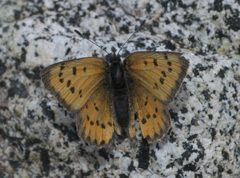
Lycaena cupreus, commonly known as the Lustrous , is a in the Lycaenidae native to the western mountains of North America. The species was first described by Edwards in 1870 under the basionym Chrysophanus cupreus. It belongs to a of copper butterflies that are frequently used as indicators of environmental change and quality. The Lustrous Copper is part of the diverse Lycaena genus, which includes species showing varying trends in response to climate change and land use pressures.
Pronunciation
How to pronounce Lycaena cupreus: /laɪˈsiːnə ˈkjuːprɪəs/
These audio files are automatically generated. While they are not always 100% accurate, they are a good starting point.
Images
Habitat
Found in the western mountains of North America. Specific microhabitat preferences have not been documented in the available sources.
Distribution
Western mountains of North America. Distribution records confirm presence in North America.
Ecological Role
Butterflies in the Lycaena, including L. cupreus, serve as indicators of environmental change. The broader Lycaena genus has been utilized in long-term monitoring programs to assess grassland and mountain health, trends, and climate change impacts.
Human Relevance
The contributes to biodiversity monitoring efforts in western North America. As part of the Lycaena , it helps scientists track responses to climate change, land use change, and degradation. The iNaturalist platform has recorded 982 observations of this species, supporting citizen science documentation.
Similar Taxa
- Lycaena xanthoidesThe great copper is another North American Lycaena that has been documented in decline in the western United States, particularly in California monitoring studies. Both species share western mountain distributions and may occupy similar .
- Lycaena phlaeasThe small copper is a widespread Lycaena used as a grassland indicator in European monitoring programs. While not directly sympatric with L. cupreus, it represents the broader butterfly ecological guild that responds similarly to environmental stressors.
More Details
Taxonomic history
Lycaena cupreus was originally described as Chrysophanus cupreus by Edwards in 1870, and later transferred to the Lycaena. The has maintained accepted taxonomic status in major databases including GBIF, Catalogue of Life, and NCBI .
Monitoring context
While not specifically named in the western United States decline studies, L. cupreus belongs to the same as L. xanthoides, which was explicitly identified as declining in California monitoring data. The may be subject to similar climate and land use pressures affecting western mountain .
Sources and further reading
- BugGuide
- GBIF taxonomy match
- iNaturalist taxon
- NCBI Taxonomy
- Catalogue of Life
- Mary Louise Flint's Article in The Acorn: 'Butterflies in Decline' | Bug Squad
- 'Climate Change' May Be a Key Factor in Declining Butterfly Populations | Bug Squad
- Over a century later, the mystery of the Alfred Wallace’s butterfly is solved | Blog
- Grassland butterflies: important indicators of the state of nature