
Lycaeninae
Coppers
Genus Guides
1- Lycaena(Lycaena butterflies)
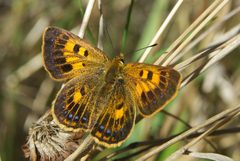
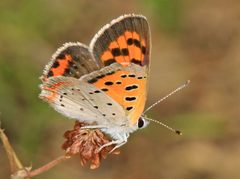
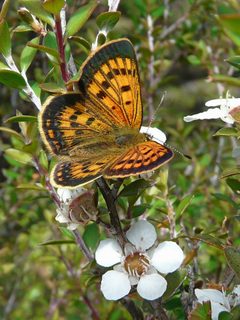
Lycaeninae, commonly known as the coppers, is a of gossamer-winged butterflies within the Lycaenidae. The group is taxonomically fluid, with boundaries historically expanded to include Polyommatinae (blues) and Theclinae (hairstreaks), but is now generally restricted to the immediate relatives of the type Lycaena. The subfamily contains two recognized tribes: Heliophorini (sapphires) and Lycaenini (typical coppers). Many genera remain of uncertain placement, and the group's continue to be refined.
Pronunciation
How to pronounce Lycaeninae: /ˌlaɪsiˈɛnaɪni/
These audio files are automatically generated. While they are not always 100% accurate, they are a good starting point.
Identification
Members of Lycaeninae sensu stricto are distinguished from other Lycaenidae by their close relationship to the Lycaena. They lack the tail-like hindwing projections characteristic of Theclinae (hairstreaks) and differ from Polyommatinae (blues) in genitalic and larval characteristics. The group is best identified by association with confirmed genera Lycaena, Heliophorus, and related rather than by a single morphological synapomorphy.
Images
Distribution
Global distribution corresponding to that of constituent , with Lycaena occurring across the Holarctic region and Heliophorus distributed in the Palearctic and Oriental regions.
Similar Taxa
- TheclinaeHistorically included in expanded circumscriptions of Lycaeninae; distinguished by tail-like hindwing projections in most and different larval .
- PolyommatinaeBlues, sometimes merged with Lycaeninae in older classifications; separated based on genitalic structure and larval characteristics.
- PoritiinaeSome formerly placed in Lycaeninae are now recognized as belonging to this distinct .
More Details
Taxonomic Instability
The delimitation of Lycaeninae remains unresolved. The has undergone repeated expansion and contraction in scope, with modern treatments favoring a restricted definition centered on Lycaena and immediate relatives. Several (Alciphronia, Apangea, Kulua, Mirzakhania, Nesa) await confirmation of their placement within the monophyletic Lycaeninae.