
Lycaena xanthoides
(Boisduval, 1852)
great copper
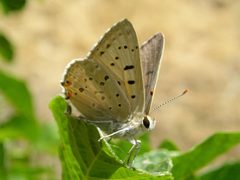
Lycaena xanthoides, the great copper, is a in the Lycaenidae found in North America. The species has experienced significant regional declines in California, with documented disappearance from low-elevation sites between Chico and Stockton by 2005. Research indicates it is among multiple butterfly species declining due to climate change and exposure, particularly neonicotinoids.
Pronunciation
How to pronounce Lycaena xanthoides: /lɪˈsiːnə zænˈθɔɪdiːz/
These audio files are automatically generated. While they are not always 100% accurate, they are a good starting point.
Images
Distribution
North America; historically present in central and northern California including the Sacramento Valley, with records from Chico to Stockton and low-elevation Sierra Nevada foothills.
Human Relevance
The has been extensively monitored by UC Davis researcher Art Shapiro since 1972 as part of one of the largest monitoring datasets in North America. Its regional extinction from low-elevation California sites has been cited as evidence of broader butterfly declines linked to climate change and use.
Sources and further reading
- BugGuide
- Wikipedia
- GBIF taxonomy match
- Catalogue of Life
- Mary Louise Flint's Article in The Acorn: 'Butterflies in Decline' | Bug Squad
- 'Climate Change' May Be a Key Factor in Declining Butterfly Populations | Bug Squad
- Where Are All the Butterflies? | Bug Squad
- Over a century later, the mystery of the Alfred Wallace’s butterfly is solved | Blog
- Grassland butterflies: important indicators of the state of nature