
Staphylus mazans
(Reakirt, 1866)
Mazans Scallopwing
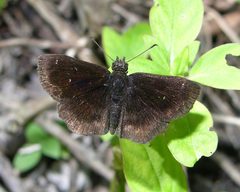
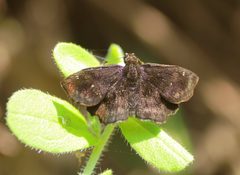
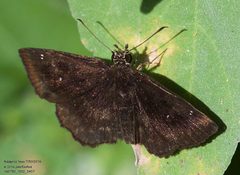
Staphylus mazans, commonly known as the Mazans Scallopwing, is a spread-wing in the Hesperiidae. The occurs across Central America and North America, with four recognized showing geographic variation. Subspecies include the nominate S. m. mazans, S. m. ascaphalus, S. m. hayhurstii, and S. m. tierra. The species has been documented in diverse including riparian corridors, sandy areas, and gardens.
Pronunciation
How to pronounce Staphylus mazans: //ˈstæfɪləs ˈmæzænz//
These audio files are automatically generated. While they are not always 100% accurate, they are a good starting point.
Identification
Images
Appearance
A small with scalloped wing margins characteristic of the Staphylus. As a spread-wing skipper, it typically rests with wings held partially open rather than folded vertically. Detailed wing pattern descriptions are not available in the provided sources.
Habitat
Occurs in varied environments including riparian corridors adjacent to waterways, sandy or dune-like areas, abandoned roads, and gardens with diverse flowering plants. One documented observation occurred in a sandhill near Willow Creek in Colorado.
Distribution
Present in Middle America (Central America) and North America. Specific countries and states documented include: Mexico, United States (Arizona, Colorado, New Mexico, Texas, Oklahoma, Kansas, Missouri). The S. m. hayhurstii has been recorded in Colorado.
Seasonality
Activity period varies by geographic location and . Multiple per year occur in southern portions of the range. Specific periods are not well-documented in available sources.
Life Cycle
Complete with , larva, pupa, and stages. Caterpillars feed on grasses (Poaceae), though specific grass for S. mazans are not documented in the provided sources.
Behavior
Males perch in low areas such as wash bottoms, road depressions, and trails early in the morning, retiring to shaded locations during afternoon hours. This perching is characteristic of the and related roadside-skippers.
Ecological Role
function as when visiting flowers for nectar. Larvae serve as herbivores on grasses. The contributes to local biodiversity in riparian and grassland .
Human Relevance
Documented by citizen scientists and enthusiasts. Records contribute to regional biodiversity databases such as Butterflies and Moths of North America (BAMONA). Observations in Colorado represent range extensions and county records of interest to lepidopterists.
Similar Taxa
- Staphylus ceos (Golden-headed Scallopwing)Similar scalloped wing margins and overall appearance; distinguished by golden coloration in S. ceos
- Amblyscirtes nysa (Nysa Roadside-Skipper)Similar preferences and perching ; distinguished by wing pattern and geographic range
- Systasea zampa (Arizona Powdered-Skipper)Superficial resemblance leading to initial misidentification; distinguished by wing pattern details
More Details
Subspecies
Four recognized: Staphylus mazans mazans (nominate), S. m. ascaphalus Staudinger 1876, S. m. hayhurstii Edwards 1870, and S. m. tierra Evans 1953. Subspecies show geographic partitioning across the range.
Nomenclature
Originally described as Carcharodus mazans by Reakirt in 1866 (or 1867 in some sources). Transferred to Staphylus.