
Megathymus yuccae
(Boisduval & Le Conte, 1833)
Yucca Giant-skipper
Megathymus yuccae is a large, robust-bodied in the Hesperiidae, Megathyminae. It is an early-season found across the southern United States in supporting yucca plants, which serve as exclusive larval . are non-feeding, though males engage in mud-puddling . The species is considered rare throughout its range.
Pronunciation
How to pronounce Megathymus yuccae: /mɛˈɡæθɪməs ˈjʌkiː/
These audio files are automatically generated. While they are not always 100% accurate, they are a good starting point.
Identification
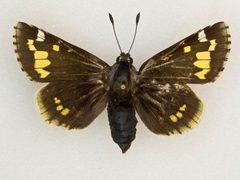
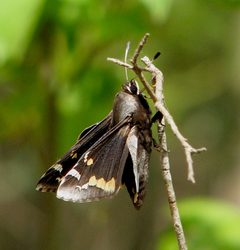
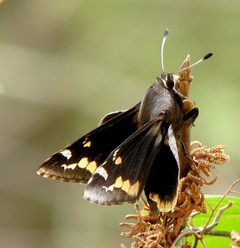
Distinguished from other giant-skippers by association with Yucca plants and early-season period. The combination of large size, brown wings with yellow forewing spots, and mottled gray-black underside separates it from similar Megathymus . with hooked clubs confirm placement in Hesperiidae.
Images
Appearance
Large and robust-bodied skipper with wingspan 48–79 mm. Upper wing surface brown with yellow spots on forewings; underside mottled black and gray. have hooked tips characteristic of Hesperiidae.
Habitat
Deserts, foothills, and woodlands where Yucca occur. suitability is directly tied to presence of plants for larval development.
Distribution
Widespread across southern United States; present in Middle America and North America. Records include Vermont, though primary range is southern US.
Seasonality
Early-season ; active in spring. Specific period varies with geographic location and local climate conditions.
Host Associations
- Yucca filamentosa - larval caterpillars feed on leaves
- Yucca smalliana - larval
- Yucca gloriosa - larval
- Yucca elata - larval
- Yucca arizonica - larval
- Yucca aloifolia - larval
Life Cycle
laid on Yucca plants. Caterpillars feed internally or externally on Yucca leaves. occurs in silk-lined chambers, often within Yucca leaf bases or stems. emerge in early spring. Complete development is tied to Yucca .
Behavior
do not feed. Males gather moisture from mud (mud-puddling ). is rapid and characteristic of skippers.
Ecological Role
Larval herbivore on Yucca ; likely serves as prey for and in desert and woodland . Specific or relationships have not been documented.
Human Relevance
Subject of entomological study due to obligate relationship with Yucca and rarity. Featured in educational materials by University of Florida. No significant economic or cultural importance documented.
Similar Taxa
- Other Megathymus speciesShare large size, robust body, and Yucca associations; distinguished by wing pattern details, geographic range, and host plant specificity
- Other Hesperiidae skippersSimilar rapid and structure; distinguished by larger size, early-season , and Yucca requirement
More Details
Conservation status
Considered rare throughout its range; likely vulnerable due to specialized plant requirements and conversion in southern US
Research gaps
Detailed studies on , , and specific relationships remain limited
Sources and further reading
- BugGuide
- Wikipedia
- GBIF taxonomy match
- iNaturalist taxon
- NCBI Taxonomy
- Catalogue of Life
- Encyrtid Holdings | Entomology Research Museum
- Yucca Giant-Skipper Butterfly, Megathymus yuccae (Boisduval & Leconte) (Insecta: Lepidoptera: Hesperiidae)
- Host Plant Selection, Larval Survival, and Reproductive Phenology inMegathymus yuccae(Lepidoptera: Hesperiidae)