
Megathymus
Scudder, 1872
giant-skippers
Species Guides
4- Megathymus cofaqui(Cofaqui Giant-Skipper)
- Megathymus streckeri(Strecker's giant skipper)
- Megathymus ursus(Ursine Giant-Skipper)
- Megathymus yuccae(Yucca Giant-skipper)
Megathymus is a of large skippers in the Hesperiidae, commonly called giant-skippers. The genus contains approximately 6 recognized distributed across North America from the southeastern United States to the southwestern United States and northern Mexico. Members of this genus are notable for their relatively large size among skippers and their specialized association with Yucca plants. The genus was established by Scudder in 1872.
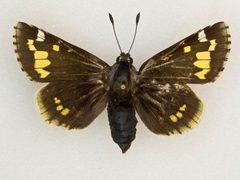
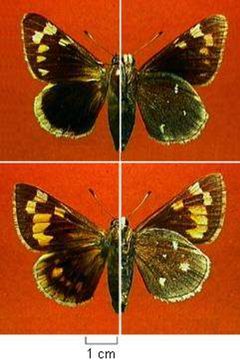
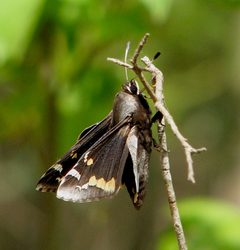
Pronunciation
How to pronounce Megathymus: //mɛˈɡæθɪməs//
These audio files are automatically generated. While they are not always 100% accurate, they are a good starting point.
Identification
Megathymus are distinguished from other Hesperiidae by their large body size relative to other skippers, with wingspans typically exceeding 40mm. They can be separated from similar large skippers by their robust, -like build and relatively broad wings. The is most reliably identified by genitalic characters and larval associations. of different species show regional variation in wing pattern, with M. yuccae showing the broadest distribution and most variable coloration across its range.
Images
Habitat
are arid and semi-arid regions including desert scrub, grasslands, and open woodlands where Yucca plants occur. occupy elevations from near sea level to montane zones, with specific habitat requirements tied to the distribution of their Yucca host plants.
Distribution
North America: southeastern United States (Georgia, Florida, North Carolina), central and south-central United States (Texas, Oklahoma, Kansas, Nebraska, Colorado, Wyoming, Montana, North Dakota, Arkansas, Louisiana), southwestern United States (Arizona, New Mexico, Utah, Nevada, southern California), and northern Mexico (Sonora, Chihuahua, Coahuila, Nuevo León, Tamaulipas, San Luis Potosí, Hidalgo).
Seasonality
are active primarily in spring and early summer, with periods varying by latitude and elevation. In southern ranges, activity may begin as early as March; in northern and higher elevation , flight extends into July. The is , with a single per year.
Diet
Larvae feed internally in the stems and roots of Yucca . have been observed feeding on flower nectar.
Host Associations
- Yucca - larval Larvae bore into stems and roots
Life Cycle
are deposited on or near Yucca plants. Larvae tunnel into stems and roots, where they feed internally and overwinter. occurs within the host plant. emerge in spring to early summer. The is closely tied to Yucca and may extend across multiple years in some .
Behavior
are rapid, powerful fliers. They exhibit a characteristic low, fast when disturbed. Males are known to perch on or near plants to await females. Larval is cryptic, with internal feeding rendering them largely invisible until host plant damage becomes apparent.
Ecological Role
As herbivores, larvae influence Yucca plant through stem and root boring. The represents a distinctive component of skipper diversity in arid North American . Their specialized relationships contribute to the ecological dynamics of Yucca-dominated .
Human Relevance
Larvae can be considered minor pests in Yucca and ornamental plantings due to internal feeding damage. The is of interest to lepidopterists due to its specialized and restricted distributions of some and .
Similar Taxa
- AgathymusFormerly treated as congeneric; distinguished by genitalic and larval associations with different Yucca groups
- AtrytonopsisSimilar large size and robust build; distinguished by wing venation, genitalic characters, and larval (grasses rather than Yucca)
More Details
Taxonomic History
Megathymus has undergone significant taxonomic revision. The was formerly broader, encompassing now placed in Agathymus. The current circumscription reflects refined understanding of genitalic and biological differences. diversity is extensive, particularly in M. yuccae and M. streckeri, reflecting geographic isolation across the genus's wide range.
Conservation Notes
Several have restricted ranges and may warrant conservation attention, particularly those isolated in specific mountain ranges or desert regions. conversion and Yucca removal pose potential threats to localized .