
Anagrapha
McDunnough, 1944
Species Guides
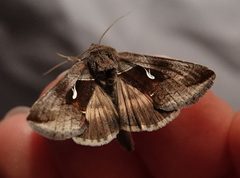
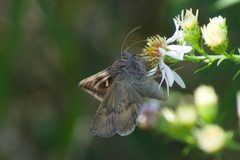
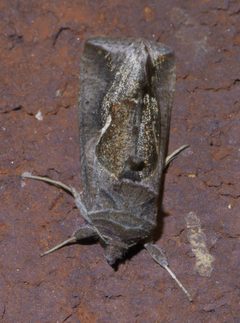
1- Anagrapha falcifera(Celery Looper)
Anagrapha is a of in the Noctuidae, Plusiinae, established by McDunnough in 1944. The genus contains at least one confirmed , Anagrapha falcifera (celery looper), which serves as the original for AfMNPV (Anagrapha falcifera multiple ), a broad host-spectrum with significant importance in research. The virus isolated from this species has been shown to infect 43 species across 13 lepidopteran families and is genetically identical to the Rachiplusia ou virus isolate.
Pronunciation
How to pronounce Anagrapha: /ˌænəˈɡræfə/
These audio files are automatically generated. While they are not always 100% accurate, they are a good starting point.
Identification
As a -level record, specific diagnostic features are not documented in available sources. Anagrapha falcifera is commonly known as the celery looper, suggesting typical plusiine with looped larval locomotion. Distinguishing Anagrapha from related plusiine genera such as Autographa and Rachiplusia requires examination of genitalia and wing pattern details not specified in available literature.
Images
Distribution
Records from GBIF indicate presence in Vermont, United States, with broader distribution in the US implied. Specific range boundaries are not documented in available sources.
Host Associations
- Anagrapha falcifera - member Celery looper; original of AfMNPV
Human Relevance
Anagrapha falcifera is notable as the source of the first patented (AfMNPV), discovered in 1985 by Ben Puttler. This virus has become an important agent with broad spectrum against lepidopteran pests, and a related isolate is now deployed in Africa for fall armyworm control.
Similar Taxa
- AutographaBoth are plusiine noctuid ; AfMNPV shows 92.3% sequence identity to Autographa californica MNPV in polyhedrin gene region, indicating close viral and likely taxonomic relationship
- RachiplusiaRachiplusia ou MNPV is 99.9% genetically identical to AfMNPV, indicating these viruses (and likely their ) are very closely related; showed no biological activity differences between the viral isolates
More Details
Viral taxonomy note
AfMNPV and RoMNPV (Rachiplusia ou multiple ) are considered isolates of the same virus based on 99.9% genetic identity and identical biological activity in . The virus has an unusually broad host range for a , infecting 43 species from 13 lepidopteran .
Sources and further reading
- BugGuide
- Wikipedia
- GBIF taxonomy match
- iNaturalist taxon
- NCBI Taxonomy
- Catalogue of Life
- The Gifts of Ben Puttler: From Aphids to Answers
- The nucleopolyhedroviruses of Rachiplusia ou and Anagrapha falcifera are isolates of the same virus
- A New Broad Host Spectrum Nuclear Polyhedrosis Virus Isolated from a Celery Looper, Anagrapha falcifera (Kirby), (Lepidoptera: Noctuidae)
- Sequencial passages of the multiple nucleopolyhedrovirus of Anagrapha falcifera(Kirby) (Lepidoptera: Noctuidae) (AfMNPV) in Spodoptera cosmioides (Walker) (Lepidoptera, Noctuidae)