
Neogalea sunia
Guenée, 1852
Lantana Stick Moth, Catabena Moth
Neogalea sunia is a noctuid and the sole in the Neogalea. Native to the Americas from the southern United States through the Caribbean to Argentina, it has been introduced to Australia and Hawaii as a agent. The species is notable for its specialized larval diet and its role in programs targeting plants.
Pronunciation
How to pronounce Neogalea sunia: //niːoʊˈɡeɪliə ˈsuːniə//
These audio files are automatically generated. While they are not always 100% accurate, they are a good starting point.
Identification
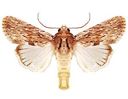
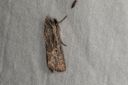
Distinguished from similar noctuids by the combination of gray-brown forewing coloration with distinct dark transverse lines and the pale hindwing with dark marginal band. The Neogalea is , so identification to genus level confirms the . In Australia and Hawaii, it may be confused with native noctuids but is recognizable by its association with plants.
Images
Appearance
are medium-sized noctuid with a wingspan of approximately 25-30 mm. Forewings are grayish-brown with darker transverse lines and a spot. Hindwings are pale with a darker marginal band. Larvae are slender, greenish caterpillars with faint longitudinal stripes.
Habitat
Found in tropical and subtropical regions, including open woodlands, disturbed areas, and urban margins where plants occur. In introduced ranges, it inhabits similar warm-climate with established .
Distribution
Native to southern United States, Caribbean (including Guadeloupe and Martinique), and South America to Argentina. Introduced to Australia (Queensland, northern New South Wales, Norfolk Island), and Hawaii.
Seasonality
have been observed year-round in tropical regions; activity peaks vary by location. In Australia, multiple occur annually in warm months.
Diet
Larvae feed exclusively on (Verbenaceae), particularly Lantana camara. This specialized diet is the basis for its use in .
Host Associations
- Lantana camara - larval plantPrimary ; introduced established specifically for control of this plant
Life Cycle
Complete with , larva, pupa, and stages. Larvae feed on foliage and flowers. occurs in soil or leaf litter. Multiple per year in favorable climates.
Behavior
are and attracted to light. Larvae feed exposed on plant foliage and flowers, often skeletonizing leaves. No evidence of maternal care or social .
Ecological Role
Herbivore specializing on ; in introduced ranges, functions as a agent reducing competitive ability of Lantana camara. Native ecological role in the Americas is poorly documented.
Human Relevance
Intentionally introduced to Australia (1962) and Hawaii as for camara, a significant weed in agriculture and natural areas. Considered partially successful in reducing Lantana in some regions.
Similar Taxa
- Other Noctuinae in the AmericasSimilar forewing patterns; distinguished by genitalia and the status of Neogalea
- Native Australian NoctuidaeMay overlap in appearance in Australia; distinguished by plant association and
More Details
Biological control history
Introduced to Norfolk Island, Australia in 1962, then to mainland Australia. established and spread, though control efficacy varies with climate and variety. Not all Lantana chemotypes are equally susceptible.
Taxonomic history
Originally described as Xylomyges sunia by Guenée in 1852; later transferred to Neogalea.