
Brachylomia populi
(Strecker, 1898)
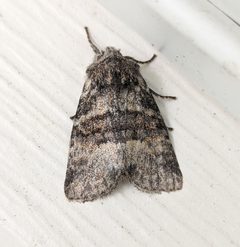
Brachylomia populi is a noctuid first described by Strecker in 1898. It inhabits the inland mountain regions of western North America, with larvae that feed specifically on cottonwood, aspen (Populus), and oak (Quercus) leaves. The species has a wingspan of approximately 30 mm and is known from 133 iNaturalist observations.


Pronunciation
How to pronounce Brachylomia populi: /ˌbræ.kɪˈloʊ.mi.ə ˈpɒ.pjuː.laɪ/
These audio files are automatically generated. While they are not always 100% accurate, they are a good starting point.
Identification
This can be distinguished from similar Brachylomia species by its specific association with Populus plants in western North American mountain . The combination of geographic range, host plant specificity, and the relatively small wingspan of approximately 30 mm aids in identification. Detailed morphological distinctions from require examination of genitalia and other fine structural characters typical of noctuid .
Images
Appearance
A small noctuid with a wingspan of approximately 30 mm. As a member of the Noctuidae, it possesses the typical robust body and dull coloration common to owlet moths, though specific color patterns are not well documented in available sources.
Habitat
Inland mountainous regions of western North America. The is associated with riparian and montane forest environments where its plants (cottonwood, aspen, and oak) occur.
Distribution
Western North America from British Columbia and Alberta south through Colorado and Utah into Arizona. Distribution records also include Saskatchewan and Manitoba in Canada.
Diet
Larvae feed on leaves of cottonwood and aspen (Populus ) and have been reported on Quercus (oak) species. feeding habits are not documented.
Host Associations
- Populus - larval cottonwood and aspen
- Quercus - larval oak
Ecological Role
As a folivorous larva, this contributes to nutrient cycling in riparian and montane forest through leaf consumption. Its specific association with Populus suggests a specialized herbivore role in these plant .
Human Relevance
Minor significance as a defoliator of Populus . The species has been documented through citizen science platforms (133 iNaturalist observations), contributing to public engagement with biodiversity.
Similar Taxa
- Other Brachylomia species in the Brachylomia share similar and noctuid characteristics; differentiation requires detailed examination of genitalia and plant associations.
More Details
Etymology
The specific epithet 'populi' refers to the Populus, the primary larval plant.
Taxonomic History
Originally described as Cleoceris populi by Strecker in 1898, later transferred to the Brachylomia.
Citizen Science Documentation
The has been documented 133 times on iNaturalist, indicating moderate detectability and public engagement with this in its range.