
Aseptis fumeola
Hampson, 1908
Aseptis fumeola is a noctuid described by George Hampson in 1908. It occurs in the southwestern United States, specifically in foothills and mountain of Arizona, California, Nevada, and Utah. The is associated with dry chaparral, parkland, and conifer forest environments. are active in early summer, and larvae have been documented feeding on Arctostaphylos species.
Pronunciation
How to pronounce Aseptis fumeola: /əˈsɛptɪs fjuːmiˈɒlə/
These audio files are automatically generated. While they are not always 100% accurate, they are a good starting point.
Identification
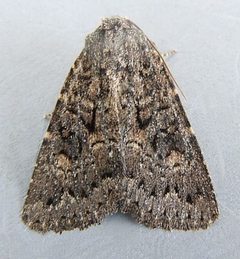
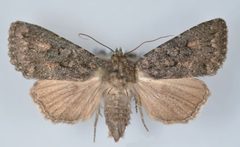
Distinguished from similar Aseptis by the relatively prominent reddish postreniform patch and the well-marked postmedial line that curves around the spot. The combination of dark basal and postmedial patches with a paler medial area containing reddish tan coloration is characteristic. The serrated subterminal line forming a prominent border between darker and paler wing areas aids recognition.
Images
Appearance
Medium-sized with wingspan 38.5–45 mm. Forewings are dark, slightly shiny gray-brown with contrasting dark patches in basal and postmedial areas. Medial area typically paler with reddish tan near large black spot, small round spot, and short claviform spot. Reddish postreniform patch relatively prominent for the group. Postmedial line usually well marked, curving around reniform spot. Serrated subterminal line forms prominent border between postmedial and paler subterminal areas. Hindwing smoky gray-brown, darker in females.
Habitat
Foothills and mountains in dry chaparral, parkland, and conifer forest. Elevational range not specified but implied to be moderate based on vegetation types.
Distribution
Southwestern United States: Arizona, southern and central California, southern Nevada, and south-eastern Utah.
Seasonality
on wing in June and July. Larval timing not specified.
Diet
Larvae feed on new leaves of Arctostaphylos , including Arctostaphylos pungens. diet not documented.
Host Associations
- Arctostaphylos pungens - larval documented from reared specimens
Life Cycle
Larvae are pale green. Specific details regarding , pupal, and stages not documented.
Ecological Role
Herbivore in chaparral and conifer forest . Specific ecological functions not documented.
Similar Taxa
- Other Aseptis speciesAseptis fumeola distinguished by relatively prominent reddish postreniform patch compared to related in the
More Details
Larval description
Larvae are pale green in coloration