
Cosmiina
Guenée, 1852
Genus Guides
4Cosmiina is a subtribe of owlet moths (Noctuidae) within the tribe Xylenini. It comprises multiple including Ipimorpha, which contains with broad geographic distributions spanning Europe, Asia, and North America. Members of this subtribe have been documented in high-altitude wetland in China.
Pronunciation
How to pronounce Cosmiina: /kɔsˈmiː.ɪ.nə/
These audio files are automatically generated. While they are not always 100% accurate, they are a good starting point.
Identification
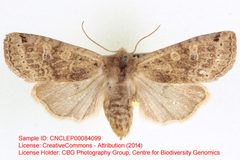
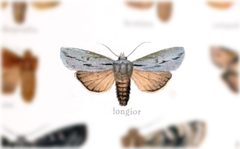
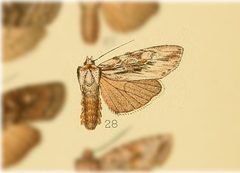
possess morphological features characteristic of the Xylenini tribe, with detailed diagnostic characters including specific configurations of the external genitalia. The subtribe can be distinguished from related Xylenini subtribes through genitalic and wing pattern characteristics, though precise diagnostic features vary by .
Images
Habitat
Includes high plateau wetlands at elevations around 3650 m, as documented for Ipimorpha in Xizang. Broader associations across the subtribe likely span temperate and zones given the documented distribution.
Distribution
Documented from China (Xizang, Heilongjiang, Xinjiang, Henan), Europe, Asia broadly, and North America. The subtribe has a Holarctic distribution pattern with extensions into high-altitude regions of Central Asia.
Seasonality
of documented have been collected in July.
Similar Taxa
- Other Xylenini subtribesCosmiina is distinguished from related subtribes within Xylenini by genitalic and wing pattern characteristics, though precise boundaries require detailed examination
More Details
Taxonomic Note
The subtribe Cosmiina was established by Guenée in 1852. Recent taxonomic work has documented new geographic records for constituent , including the first record of Ipimorpha from Xizang, China in 2021.