
Orthosia erythrolita
(Grote, 1879)
Pronunciation
How to pronounce Orthosia erythrolita: //ɔːrˈθoʊ.si.ə ˌɛr.ɪˈθroʊ.lɪ.tə//
These audio files are automatically generated. While they are not always 100% accurate, they are a good starting point.
Identification
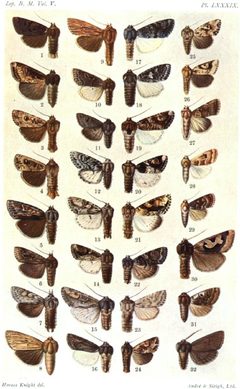
Orthosia erythrolita can be distinguished from congeneric by specific wing pattern and coloration details, though precise diagnostic features require examination of specimens. The specific epithet "erythrolita" suggests reddish coloration elements. Separation from similar Orthosia species such as O. hibisci and O. gothica relies on subtle differences in forewing markings, size, and color tone. Accurate identification typically requires reference to specialized Noctuidae keys or expert verification.
Images
Distribution
North America. Specific records indicate presence across the continent, though detailed range boundaries are not well documented in available sources.
Seasonality
likely fly in spring, consistent with the of related Orthosia . Exact period dates are not established in available literature.
Behavior
are attracted to artificial light sources, as is characteristic of many Noctuidae. This has been documented through blacklighting observations.
Similar Taxa
- Orthosia hibisciSpeckled Green Fruitworm ; similar spring-flying Orthosia with caterpillar feeding habits on deciduous trees and shrubs, but differs in specific wing pattern and coloration.
- Orthosia gothicaHebrew Character ; another early spring Orthosia with similar , but distinguished by characteristic dark forewing markings.
- Orthosia cerasiCommon Quaker ; early spring with overlapping period, separable by wing pattern details.
More Details
Taxonomic history
Originally described as Graphiphora erythrolita by Grote in 1879, later transferred to Orthosia.
Collection reference
Recorded in the of North America (MONA) database with Hodges number 10477, a standard reference number for North American Lepidoptera.