
Achatia distincta
Hübner, 1813
Distinct Quaker
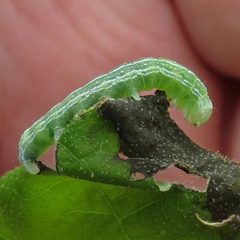
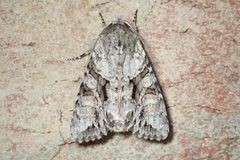
Achatia distincta, commonly known as the Distinct Quaker, is a noctuid native to eastern North America. are active in early spring, with a single flying from late March to early May. The is notable for its relatively broad plant range, with larvae feeding on leaves of multiple deciduous tree including ash, birch, maple, oak, and grape.
Pronunciation
How to pronounce Achatia distincta: /æˈkeɪʃiə dɪˈstɪŋktə/
These audio files are automatically generated. While they are not always 100% accurate, they are a good starting point.
Identification
Distinguished from similar noctuid by its early spring period (late March to early May) and geographic distribution primarily east of the Great Plains. The specific epithet 'distincta' suggests some distinguishing morphological characteristic, though precise diagnostic features are not detailed in available sources. Scattered records occur farther west than the main range.
Images
Appearance
Wingspan 30–37 mm. Forewings and hindwings typically grayish-brown with subtle patterning. Specific wing markings and body coloration details not documented in available sources.
Habitat
Associated with deciduous forest where trees are present. Occurs in areas supporting ash, birch, butternut, hickory, maple, oak, and grape. Specific microhabitat preferences not documented.
Distribution
Coast-to-coast distribution across most of the United States, with concentration in eastern regions primarily east of the Great Plains. Southeastern Canada from Quebec to Manitoba. Scattered western records exist beyond the main range.
Seasonality
on wing from late March to early May. Single per year (). Early spring is characteristic.
Diet
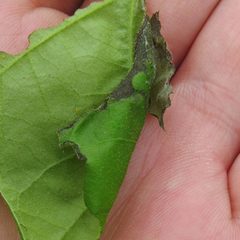
Larvae feed on leaves of ash (Fraxinus), birch (Betula), butternut (Juglans cinerea), flowering crabapple (Malus), grape (Vitis), hickory (Carya), maple (Acer), and oak (Quercus). feeding habits not documented.
Host Associations
- Fraxinus - larval food plantash
- Betula - larval food plantbirch
- Juglans cinerea - larval food plantbutternut
- Malus - larval food plantflowering crabapple
- Vitis - larval food plantgrape
- Carya - larval food planthickory
- Acer - larval food plantmaple
- Quercus - larval food plantoak
Life Cycle
Single per year. stage not explicitly documented in available sources, though pupal is typical for noctuids in this region. Larval development occurs on plant foliage.
Behavior
are and attracted to light. Has been observed at blacklighting stations in early spring. Specific mating, oviposition, or larval not documented.
Ecological Role
Larval stage functions as a folivore on deciduous trees. Role in as prey for and not documented. Contribution to nutrient cycling through herbivory on multiple tree .
Human Relevance
Not considered an agricultural or forestry pest. Occasional presence in residential areas where trees are planted. No economic significance documented.
Similar Taxa
- Kocakina fidelisFormerly Himella fidelis; also an early spring Noctuidae with overlapping range, but with more restricted preferences (oak, elm, flowering crabapple, hickory, cherry)
- Other OrthosiiniTribe members share general and ; precise differentiation requires examination of genitalia or specific wing pattern elements not detailed in available sources
More Details
Taxonomic history
described by Jacob Hübner in 1813. Hodges number 10518.
Flight period
Early spring distinguishes this from many summer-flying noctuids in the same region.
Host plant breadth
The documented range spans eight in six plant , indicating significant dietary flexibility in the larval stage.
Sources and further reading
- BugGuide
- Wikipedia
- GBIF taxonomy match
- iNaturalist taxon
- NCBI Taxonomy
- Catalogue of Life
- Like a Moth to a Flame: Moth Night at Bohart Museum of Entomology | Bug Squad
- Meloidae Holdings | Entomology Research Museum
- Bohart Museum of Entomology: One Busy Place! | Bug Squad
- Scarab Beetles First to Arrive at UC Davis 'Moth Night' | Bug Squad
- Bug Eric: First Night of Blacklighting
- Bug Eric: April 2024