
Xestia xanthographa
(Denis & Schiffermüller, 1775)
Square-spot Rustic
A widespread noctuid with a Palearctic and North American distribution. The has served as a key indicator in research demonstrating detrimental effects of street-lighting on caterpillar abundance. are abundant in late summer and autumn, and the species represents common prey for autumn-flying bats.
Pronunciation
How to pronounce Xestia xanthographa: //ˈzɛs.ti.ə zænˈθoʊ.ɡrə.fə//
These audio files are automatically generated. While they are not always 100% accurate, they are a good starting point.
Identification
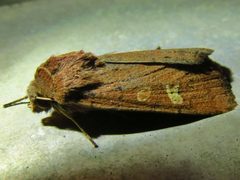
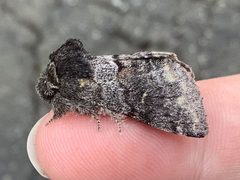
Distinguished from similar Xestia by the square or rectangular dark spot on the forewing. The pale hindwings and overall muted coloration help separate it from more boldly patterned noctuids. Genitalia examination may be required for definitive identification from closely related species.
Images
Appearance
Medium-sized noctuid . Forewings typically pale brown to greyish with a characteristic square or rectangular dark spot near the center, giving the its . Hindwings pale, often whitish or cream-colored. Overall coloration variable but generally muted earth tones.
Habitat
Deciduous woodland; also found in a variety of open and semi-open including grasslands, gardens, and agricultural areas. Specimens have been collected using light traps.
Distribution
Widespread across the Palearctic, Europe, North Africa, and North America. Present in Belgium, Brussels-Capital Region, and throughout much of northern Asia excluding China.
Seasonality
abundant from August to September in the UK; late summer and autumn period. Overwinters as larvae.
Diet
Larvae are feeders on various grasses.
Life Cycle
Overwinters as larva. emerge in late summer, with peak abundance in August to September in UK .
Behavior
Larvae feed nocturnally. show auditory sensitivity broadly tuned with optimal frequency of 30 kHz, an facilitating bat avoidance.
Ecological Role
Common prey for autumn-flying bats. Key in studies demonstrating negative impacts of artificial street-lighting on caterpillar abundance in urban and suburban environments.
Human Relevance
Used as a model in ecological research on light pollution effects. No significant direct economic impact documented.
Similar Taxa
- Xestia c-nigrumSimilar and general appearance; distinguished by forewing pattern featuring a C-shaped or crescent mark rather than square spot
- Other Xestia speciesClosely related in same may require genitalia examination for definitive separation
More Details
Bat avoidance adaptation
Auditory sensitivity tuned to approximately 30 kHz represents an evolutionary to detect echolocation calls of common autumn-flying bat .
Research significance
studies of this have contributed to understanding how artificial light at night reduces caterpillar abundance in affected .