
Ochropleura implecta
Lafontaine, 1998
Flame-shouldered Dart
Ochropleura implecta is a North American noctuid described by Don Lafontaine in 1998. It was distinguished from the European and Asian Ochropleura plecta based on morphological differences. The has a broad transcontinental distribution across North America and exhibits activity.
Pronunciation
How to pronounce Ochropleura implecta: //ˌɔːkrəʊˈplʊə rə ɪmˈplɛktə//
These audio files are automatically generated. While they are not always 100% accurate, they are a good starting point.
Identification
Distinguished from the similar Palearctic Ochropleura plecta by genitalic characters and subtle wing pattern differences. The flame-shouldered patch on the forewing base separates it from most other North American Noctuinae with which it might be confused. Dissection of genitalia is required for definitive separation from related .
Images
Appearance
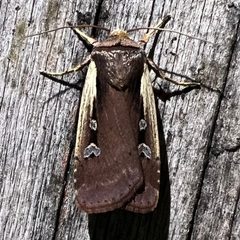
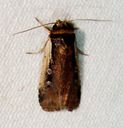
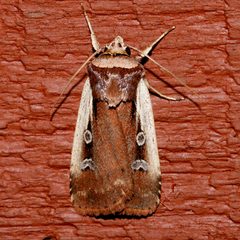
Wingspan 25–32 mm. Forewings gray-brown with a distinctive orange or reddish patch at the base of the forewing (the "flame shoulder"), from which the derives. Hindwings pale gray to whitish. Body stout, typical of noctuine .
Habitat
Open including fields, meadows, roadsides, and disturbed areas. Associated with agricultural and semi-natural environments where larval plants occur.
Distribution
Transcontinental in North America: Newfoundland to South Carolina, west to Arizona, north to British Columbia. Canadian records include Alberta, Manitoba, and Saskatchewan.
Seasonality
active from April to September. Two per year (): spring generation and summer generation.
Diet
Larvae feed on beet (Beta vulgaris), clover (Trifolium), chicory (Cichorium), and willow (Salix). on herbaceous plants and low-growing woody vegetation.
Host Associations
- Beta vulgaris - larval food plantbeet
- Trifolium - larval food plantclover
- Cichorium - larval food plantchicory
- Salix - larval food plantwillow
Life Cycle
: two per year. stage not explicitly documented in available sources but likely as pupa or larva based on Noctuinae patterns. emerge April–September with peak activity corresponding to two discrete periods.
Behavior
. attracted to light. Larvae ground-dwelling or low-feeding on plants.
Ecological Role
Herbivore in early successional and open . Larval feeding on diverse plants contributes to nutrient cycling. serves as prey for including bats and birds.
Human Relevance
Minor agricultural pest: larvae feed on beet and clover crops. Not considered a significant economic pest. Subject of taxonomic interest due to its recent description and distinction from the Palearctic O. plecta.
Similar Taxa
- Ochropleura plectaEuropean and Asian from which O. implecta was distinguished; nearly identical in external appearance but separated by genitalic and geographic range
Misconceptions
Previously confused with Ochropleura plecta; the 1998 description clarified that North American represent a distinct , not a transcontinental distribution of the Palearctic .
More Details
Taxonomic history
Described by Canadian lepidopterist J. Donald Lafontaine in 1998 based on North American material previously misidentified as O. plecta. The description was part of ongoing revisionary work on North American Noctuinae.
Conservation status
Not formally assessed; appears secure given broad distribution and association with common, widespread .