
Agnorisma bollii
Grote, 1881
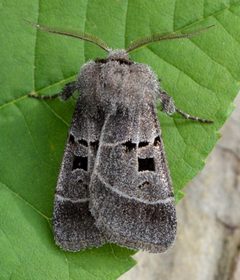
Square-spotted Dart
Agnorisma bollii is a noctuid known from a disjunct distribution in eastern and central North America. The is considered rare across its range, with occurring west of the Appalachian Mountains and in the Chesapeake Bay region. are active in late summer and autumn. The larval plant remains unknown.


Pronunciation
How to pronounce Agnorisma bollii: /æɡnəˈrɪzmə ˈbɒlɪaɪ/
These audio files are automatically generated. While they are not always 100% accurate, they are a good starting point.
Identification
May be distinguished from other Agnorisma by geographic location and period. The "Square-spotted Dart" suggests diagnostic wing patterning, though specific markings are not detailed in available literature.
Images
Appearance
Wingspan approximately 32 mm. Specific coloration and pattern details not documented in available sources.
Habitat
Associated with deciduous forest in the Appalachian and Ohio River valley regions. Specific microhabitat preferences not documented.
Distribution
Disjunct range including the Chesapeake Bay area of Maryland, Great Smoky Mountains National Park, and areas west of the Appalachians from southern Ohio and southeastern Kansas south to Mississippi and Arkansas. A single specimen has been recorded from South Carolina, though its status there (introduction or remnant ) is undetermined.
Seasonality
on wing from August to October, with exact timing varying by location.
Life Cycle
Complete with , larva, pupa, and stages. Larval plant unknown.
Similar Taxa
- Other Agnorisma speciesSame , distinguished by wing pattern, geographic range, and possibly period
- Other Noctuinae dartsSimilar size and general ; identification requires examination of genitalia or specific wing markings