
Striacosta
Lafontaine, 2004
western bean cutworm (for sole species S. albicosta)
Species Guides
1- Striacosta albicosta(Western Bean Cutworm)
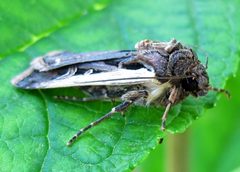
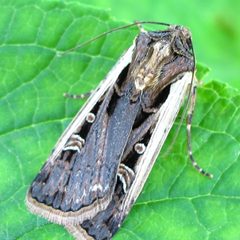
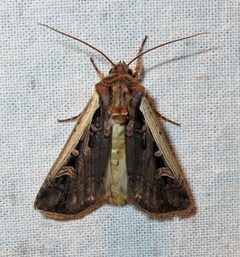
Striacosta is a of in the Noctuidae, established by Lafontaine in 2004. The sole , Striacosta albicosta (western bean ), is an agricultural pest native to North America. The species underwent significant range expansion from the western Great Plains to eastern North America beginning in 1999. Larvae are serious pests of corn and dry bean crops, with documented resistance to Cry1F Bt protein.
Pronunciation
How to pronounce Striacosta: /ˈstraɪ.əˌkɔstə/
These audio files are automatically generated. While they are not always 100% accurate, they are a good starting point.
Identification
The Striacosta is recognized by its single included S. albicosta. are medium-sized noctuid . Larvae can be distinguished from similar corn-feeding caterpillars by their feeding injury pattern: western bean larvae feed on corn ear reproductive parts, typically entering through the silk channel and feeding on kernels, unlike corn earworm (Helicoverpa zea) which often feeds deeper in the ear tip, or fall armyworm (Spodoptera frugiperda) which may cause more ragged feeding damage.
Images
Habitat
Agricultural croplands, specifically corn (Zea mays) and dry bean (Phaseolus vulgaris) fields. Soil constitutes an important component as prepupal and pupal stages occur in soil.
Distribution
Native to western Great Plains of North America (western Nebraska, Kansas, Idaho, eastern Colorado). Range expanded beginning 1999/early 2000s to U.S. Corn Belt, Texas, New York, Canada, and Mexico. Climate modeling indicates potential suitability for establishment in Europe, Asia, Oceania, South America, and Africa.
Diet
Larvae feed on reproductive parts of corn and dry bean plants. Feeding is concentrated on corn ears and dry bean pods.
Host Associations
- Zea mays - primary corn ears
- Phaseolus vulgaris - primary dry bean pods
Life Cycle
Includes , larval, prepupal, and pupal stages. Prepupal and pupal stages occur in soil.
Behavior
Documented range expansion from western to eastern North America since 1999, hypothesized to result from ecological factors (climate, resource availability, absence of natural enemies) and agronomic factors (increased cultivated areas, anthropogenic , management practices). Documented resistance to Cry1F Bt protein has been observed.
Ecological Role
Agricultural pest . Larval feeding causes direct yield losses up to 40% in corn and 10% in dry beans. Feeding damage facilitates secondary fungal in corn ears and exposes dry bean pods to and other pests.
Human Relevance
Significant economic pest of corn and dry bean production. Management includes Bt crops (though resistance to Cry1F exists), applications, and cultural practices. Non-Bt planting is recommended for resistance management. Subject of insecticide resistance management programs and predictive modeling for range expansion under climate change.
Similar Taxa
- Helicoverpa zea (corn earworm)Also feeds on corn ears; distinguished by feeding deeper in ear tip and different injury pattern
- Spodoptera frugiperda (fall armyworm)Also causes corn ear injury; distinguished by more ragged feeding damage and different characteristics
Sources and further reading
- BugGuide
- Wikipedia
- GBIF taxonomy match
- iNaturalist taxon
- NCBI Taxonomy
- Catalogue of Life
- Striacosta albicosta Archives - Entomology Today
- Whodunit? Solving Corn Pest Mysteries When Suspects Have Fled the Scene
- The Problems Driving Resistance to Bt Crops—and Some Proposed Solutions
- Modeling of suitable geographic areas for Striacosta albicosta in corn and dry bean crops under climate change scenarios.