
Euxoa xasta
Barnes & McDunnough, 1910
cutworm moth, dart moth
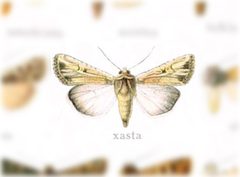
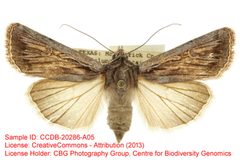
Euxoa xasta is a of or dart moth in the Noctuidae, described by William Barnes and James Halliday McDunnough in 1910. It is native to North America and is assigned MONA/Hodges number 10821. As a member of the large Euxoa, it shares characteristics with other cutworm moths whose larvae are known agricultural pests, though specific details about this species' remain limited in available sources.
Pronunciation
How to pronounce Euxoa xasta: /juːkˈsoʊə ˈzæstə/
These audio files are automatically generated. While they are not always 100% accurate, they are a good starting point.
Identification
Euxoa xasta can be distinguished from similar Euxoa by its specific wing pattern characteristics and genitalia , though precise diagnostic features require examination. The MONA/Hodges number 10821 provides a standardized reference for identification in North American inventories. Accurate species-level identification within Euxoa typically requires dissection and comparison of male genitalia structures.
Images
Appearance
As a noctuid in the Euxoa, likely have the typical drab, brownish coloration characteristic of cutworm moths. The genus Euxoa generally includes medium-sized moths with relatively broad forewings that often display intricate patterns of lines and spots in shades of brown, gray, or black, serving as camouflage against soil and plant debris.
Distribution
Found in North America. Specific regional distribution details within this range are not well documented in available sources.
Similar Taxa
- Euxoa auxiliarisAlso a North American cutworm in the same , but distinguished by its well-documented status as the '' with a unique involving alpine summer and specific association with grizzly bear diets in the Rocky Mountains—traits not established for E. xasta.
- Euxoa mimallonisAnother Euxoa found in North America with similar general appearance as a drab noctuid , but separable by wing pattern details and geographic distribution patterns.
- Agrotis spp.Related cutworm moths in the Noctuidae with similar larval habits and ; Euxoa typically differ in genitalia structure and specific wing venation patterns.
More Details
Taxonomic reference
Assigned MONA ( of North America) / Hodges number 10821, a standardized numbering system for North American Lepidoptera.
Sources and further reading
- BugGuide
- Wikipedia
- GBIF taxonomy match
- iNaturalist taxon
- NCBI Taxonomy
- Catalogue of Life
- Aboveground Pests - AgriLife Extension Entomology
- Stem- and Leaf- Feeding Insects - AgriLife Extension Entomology
- Bug Eric: Winter 'pillars
- How Army Cutworm Moths Bounce Between Midwest Heat and Alpine Cool
- Bug Eric: My Kind of Fourth of July
- Bug Eric: July 2019