
Euxoa teleboa
Smith, 1890
cutworm moth, dart moth
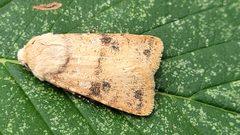
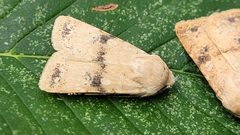
Euxoa teleboa is a of or dart moth in the Noctuidae, first described by Smith in 1890. It is found in North America, with confirmed records from Alberta and Saskatchewan in Canada. As a member of the Euxoa, it shares the general of cutworm moths, with larvae that are feeders on plants. The species is poorly documented compared to related cutworms like the ().
Pronunciation
How to pronounce Euxoa teleboa: //juːkˈsoʊ.ə tɛˈlɛb.oʊ.ə//
These audio files are automatically generated. While they are not always 100% accurate, they are a good starting point.
Identification
Euxoa teleboa belongs to the Euxoa, which contains numerous similar-appearing cutworm moth . Distinguishing E. teleboa from requires examination of genitalia or detailed wing pattern analysis by . The species lacks the distinctive and widespread documentation of the ().
Images
Habitat
Specific preferences for Euxoa teleboa are not documented. Related Euxoa occupy grassy and weedy fields, agricultural areas, and open habitats where larval plants grow.
Distribution
North America. Confirmed records from Alberta and Saskatchewan, Canada. The full extent of its range within North America is not well established.
Similar Taxa
- Euxoa auxiliarisThe is the most well-known Euxoa , but E. teleboa is distinguished by its different distribution pattern and lack of the massive migratory and bear- documented for E. auxiliaris.
- Other Euxoa speciesThe Euxoa contains many similar cutworm moths; E. teleboa is differentiated by geographic distribution and subtle morphological features requiring examination.
More Details
Taxonomic status
Euxoa teleboa is an accepted per Catalogue of Life, GBIF, and NCBI databases. It has received limited research attention compared to economically important .
Data limitations
The has only 6 observations in iNaturalist as of the knowledge cutoff, indicating it is rarely encountered or underreported. No dedicated studies were found in the provided sources.
Sources and further reading
- BugGuide
- Wikipedia
- GBIF taxonomy match
- iNaturalist taxon
- NCBI Taxonomy
- Catalogue of Life
- Aboveground Pests - AgriLife Extension Entomology
- Stem- and Leaf- Feeding Insects - AgriLife Extension Entomology
- Bug Eric: Winter 'pillars
- How Army Cutworm Moths Bounce Between Midwest Heat and Alpine Cool
- Bug Eric: My Kind of Fourth of July
- Bug Eric: July 2019