
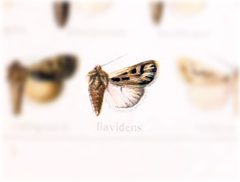
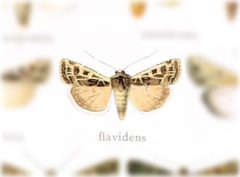
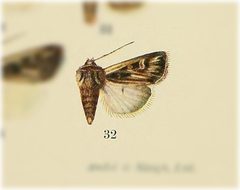
Euxoa flavidens
Smith, 1888
cutworm moth, dart moth
Pronunciation
How to pronounce Euxoa flavidens: /juˈzoʊ.ə ˈflæv.ɪˌdɛnz/
These audio files are automatically generated. While they are not always 100% accurate, they are a good starting point.
Identification
Images
Distribution
North America. Specific range details beyond continental distribution are not documented in available sources.
Human Relevance
As a cutworm moth, Euxoa flavidens may have larvae that feed on agricultural crops or grasses, though specific economic impact or pest status for this is not documented. The Euxoa includes several species known as agricultural pests of small grains and other crops.
Similar Taxa
- Euxoa auxiliarisBoth are Euxoa cutworm moths found in North America with similar , though E. auxiliaris is a well-documented pest of small grains with distinctive migratory to alpine areas.
- Euxoa mimallonisAnother Euxoa in the same with similar ; E. mimallonis is recorded in western North America and attracted to blacklights.
- Agrotis spp.Related noctuid cutworms with similar larval feeding habits on crops; Agrotis are often confused with Euxoa in agricultural pest contexts.
More Details
Taxonomic Reference
Euxoa flavidens was described by Smith in 1888. The is catalogued in major taxonomic databases including Catalogue of Life, GBIF, and NCBI .
Observation Data
As of available records, iNaturalist documents 10 observations of this , indicating it is encountered infrequently relative to more common Euxoa species.
Sources and further reading
- BugGuide
- Wikipedia
- GBIF taxonomy match
- iNaturalist taxon
- NCBI Taxonomy
- Catalogue of Life
- Aboveground Pests - AgriLife Extension Entomology
- Stem- and Leaf- Feeding Insects - AgriLife Extension Entomology
- Bug Eric: Winter 'pillars
- How Army Cutworm Moths Bounce Between Midwest Heat and Alpine Cool
- Bug Eric: My Kind of Fourth of July
- Bug Eric: July 2019