
Euxoa edictalis
(Smith, 1893)
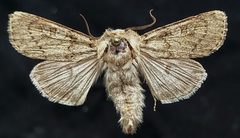
Euxoa edictalis is a in the Noctuidae, first described by Smith in 1893. The species has a wingspan of 35–39 mm and occurs in western North America from southern Alberta and Montana west to British Columbia, and south through California, Nevada, Utah, and Colorado. are active in May in Alberta, with one per year. Like other Euxoa species, the larvae are likely cutworms that feed on plants, though specific records for this species are not documented.
Pronunciation
How to pronounce Euxoa edictalis: /juːkˈsoʊ.ə ˌiː.dɪkˈteɪ.lɪs/
These audio files are automatically generated. While they are not always 100% accurate, they are a good starting point.
Identification
The can be distinguished from similar Euxoa species by its geographic range and period. fly in May in Alberta, with one annually. Definitive identification requires examination of genitalia or other specialized morphological features not detailed in general sources. The species occurs in a region of overlap with numerous related Euxoa species, making precise field identification challenging without expert verification.
Images
Habitat
Found in western montane and intermontane regions including grasslands, open woodlands, and agricultural areas. The occurs across a broad elevational range from lowland valleys to montane zones.
Distribution
North America: south-central Alberta and east-central Montana, west to south-central British Columbia, south to central California, southern Nevada, central Utah, and western Colorado.
Seasonality
are on wing in May in Alberta. One per year ().
Life Cycle
One per year. emerge in spring (May in Alberta). , larval development, and periods are not specifically documented for this , but likely follow the typical Euxoa pattern of egg-laying in late spring or summer, larval feeding through summer and/or fall, and as larvae or pupae.
Behavior
are and attracted to light. Specific behavioral details are not documented.
Ecological Role
As a probable , larvae likely function as herbivores in their . may serve as prey for including bats and birds.
Human Relevance
Similar Taxa
- Euxoa auxiliarisSimilar geographic range in western North America and shared , but E. auxiliaris is larger, has a different period (late spring to summer), and exhibits distinctive migratory to alpine areas for summer .
- Euxoa mimallonisOverlapping range in western North America; distinguished by different period and specific forewing pattern elements.
- Other Euxoa speciesNumerous occur in sympatry; precise identification requires examination of genitalia and other detailed morphological features.
More Details
Nomenclature
Originally described as Carneades edictalis by Smith in 1893, later transferred to Euxoa.
Research gaps
Detailed , larval plants, and specific morphological diagnostic features for this remain poorly documented in accessible literature.
Sources and further reading
- BugGuide
- Wikipedia
- GBIF taxonomy match
- iNaturalist taxon
- NCBI Taxonomy
- Aboveground Pests - AgriLife Extension Entomology
- Stem- and Leaf- Feeding Insects - AgriLife Extension Entomology
- Bug Eric: Winter 'pillars
- How Army Cutworm Moths Bounce Between Midwest Heat and Alpine Cool
- Bug Eric: My Kind of Fourth of July
- Bug Eric: July 2019