
Euxoa choris
Harvey, 1876
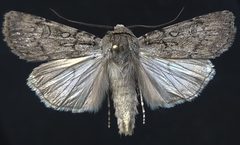
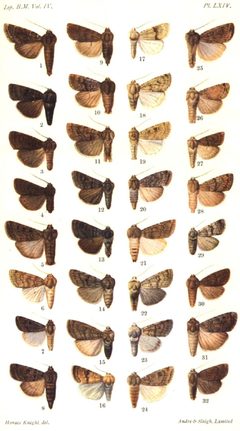
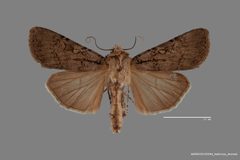
Euxoa choris is a noctuid described by Leon F. Harvey in 1876. It occurs across western North America from the Yukon and Canadian prairies south to the southwestern United States. are active during summer months with a single . The is one of many Euxoa moths attracted to ultraviolet light sources.
Pronunciation
How to pronounce Euxoa choris: /juːkˈsoʊə ˈkɔːrɪs/
These audio files are automatically generated. While they are not always 100% accurate, they are a good starting point.
Identification
Wingspan 41–43 mm distinguishes it from smaller Euxoa . fly June–August with single . Distinguished from Euxoa auxiliaris () by smaller size and more northerly/western distribution. Accurate species identification within Euxoa requires examination of genitalia or .
Images
Habitat
Occurs in prairie, grassland, and open woodland across western North America. Found from subarctic regions (Yukon) to arid southwestern deserts.
Distribution
North America: south-western Saskatchewan, central Alberta, south-central Yukon south to New Mexico, Arizona, and California.
Seasonality
active June to August. One per year.
Life Cycle
One per year. stage not documented in available sources.
Behavior
. attracted to ultraviolet light sources.
Similar Taxa
- Euxoa auxiliarisLarger wingspan (typically 40–50 mm), more easterly distribution, economically significant as agricultural pest; E. choris is smaller and not reported as pest
- Euxoa mimallonisOverlapping distribution and seasonality; distinguished by wing pattern and genitalia
More Details
Sources and further reading
- BugGuide
- Wikipedia
- GBIF taxonomy match
- iNaturalist taxon
- NCBI Taxonomy
- Catalogue of Life
- Bug Eric: Winter 'pillars
- How Army Cutworm Moths Bounce Between Midwest Heat and Alpine Cool
- Bug Eric: My Kind of Fourth of July
- Bug Eric: My Personal National Moth Week, 2017
- Bug Eric: July 2019
- This Artificial Diet May Make Insect Rearing Easier