
Euxoa bicollaris
Grote, 1878
Euxoa bicollaris is a noctuid in the Euxoa, characterized by a wingspan of approximately 32 mm. The is to western North America, with its core distribution in California and range extending northward to southern British Columbia. As a member of the cutworm moth group, its larvae likely exhibit typical feeding habits, though species-specific biological details remain poorly documented.

Pronunciation
How to pronounce Euxoa bicollaris: //juːkˈsoʊə baɪkəˈlɛərɪs//
These audio files are automatically generated. While they are not always 100% accurate, they are a good starting point.
Identification
Euxoa bicollaris can be distinguished from similar Euxoa by geographic distribution, being primarily restricted to California and adjacent regions. Definitive identification requires examination of genitalia or molecular analysis, as external overlaps with many congeneric species. The specific epithet 'bicollaris' may refer to distinctive collar markings, though this requires verification.
Images
Appearance
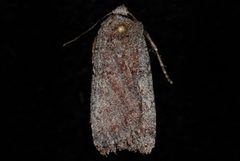
have a wingspan of about 32 mm. Specific coloration and pattern details are not well documented in available sources. As a member of the Euxoa, adults likely exhibit the drab, brownish coloration typical of noctuid cutworm moths, with forewings that may show variable patterning including lines and spots.
Distribution
Predominantly found in California, with range extending northward to the southern edge of British Columbia.
Similar Taxa
- Euxoa auxiliarisBoth are Euxoa with western North American distributions; E. auxiliaris is larger, more widespread, and a major agricultural pest with well-documented , whereas E. bicollaris is restricted to California and adjacent regions with limited biological data.
- Euxoa mimallonisSimilar size and western distribution; E. mimallonis has been recorded from Colorado and adjacent states, with attracted to ultraviolet light.
Sources and further reading
- BugGuide
- Wikipedia
- GBIF taxonomy match
- iNaturalist taxon
- NCBI Taxonomy
- Catalogue of Life
- Aboveground Pests - AgriLife Extension Entomology
- Stem- and Leaf- Feeding Insects - AgriLife Extension Entomology
- Bug Eric: Winter 'pillars
- How Army Cutworm Moths Bounce Between Midwest Heat and Alpine Cool
- Bug Eric: My Kind of Fourth of July
- Bug Eric: July 2019