
Euxoa atomaris
(Smith, 1890)
Euxoa atomaris is a noctuid first described by Smith in 1890. are active from July to September and have a wingspan of 30–34 mm. The species is distributed across western North America from the northern Great Plains to the southwestern United States. Three are recognized: E. a. atomaris, E. a. detesta, and E. a. esta.

Pronunciation
How to pronounce Euxoa atomaris: //juːkˈsoʊ.ə ætoʊˈmɛərɪs//
These audio files are automatically generated. While they are not always 100% accurate, they are a good starting point.
Identification
The can be distinguished from similar Euxoa species by its specific geographic range and period. Accurate identification likely requires examination of genitalic structures or comparison with . The three recognized (atomaris, detesta, esta) may show subtle morphological differences in wing pattern or size.
Images
Appearance
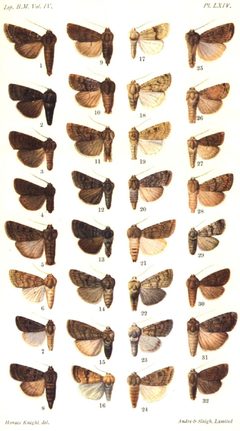
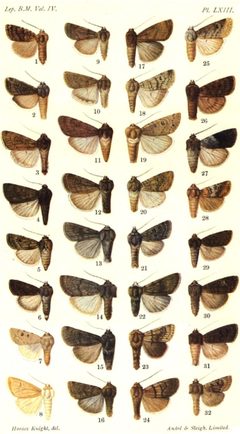
have a wingspan of 30–34 mm. As a member of the Euxoa, adults likely exhibit the drab, brownish coloration typical of cutworm moths, though specific color pattern details for this are not documented in available sources.
Habitat
Specific preferences are not documented. Based on its distribution across grassland and semi-arid regions of western North America, the likely occurs in open habitats including prairies, grasslands, and agricultural areas.
Distribution
North America: from North Dakota, southern Alberta and British Columbia, south to central New Mexico, Arizona, and southern California.
Seasonality
are on wing from July to September.
Life Cycle
Complete with , larva, pupa, and stages. Specific details of the are not documented for this . As a Euxoa species, larvae likely overwinter and pupate in soil.
Behavior
are and attracted to light. Specific behavioral details are not documented.
Similar Taxa
- Euxoa auxiliarisSimilar and (''), but E. auxiliaris has a much broader distribution including the Great Plains and is known for mass to alpine areas— not documented for E. atomaris.
- Other Euxoa speciesMany Euxoa are morphologically similar and require detailed examination for identification; E. atomaris is distinguished by its specific western distribution and period.
More Details
Subspecies
Three are recognized: Euxoa atomaris atomaris, Euxoa atomaris detesta, and Euxoa atomaris esta. The taxonomic distinctions between these subspecies are not detailed in available sources.
Sources and further reading
- BugGuide
- Wikipedia
- GBIF taxonomy match
- iNaturalist taxon
- NCBI Taxonomy
- Aboveground Pests - AgriLife Extension Entomology
- Stem- and Leaf- Feeding Insects - AgriLife Extension Entomology
- Bug Eric: Winter 'pillars
- How Army Cutworm Moths Bounce Between Midwest Heat and Alpine Cool
- Bug Eric: My Kind of Fourth of July
- Bug Eric: July 2019