
Agrotis vancouverensis
Grote, 1873
Vancouver Dart
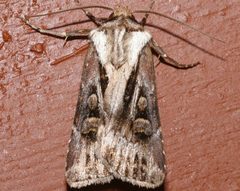
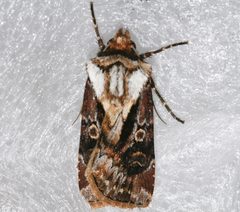
Agrotis vancouverensis, commonly known as the Vancouver Dart, is a noctuid native to the Pacific Northwest of North America. The was first described by Augustus Radcliffe Grote in 1873. are active in late spring and early summer with a single . The forewings measure approximately 33 mm in length.
Pronunciation
How to pronounce Agrotis vancouverensis: /əˈɡroʊtɪs vænˌkuːvərˈɛnsɪs/
These audio files are automatically generated. While they are not always 100% accurate, they are a good starting point.
Identification
Distinguished from other Agrotis by its geographic restriction to the Pacific Northwest region west of the Cascade Mountains. Forewing length of approximately 33 mm provides a size reference. Exact diagnostic morphological features separating it from are not specified in available literature.
Images
Appearance
Forewings approximately 33 mm in length. Specific coloration and pattern details not documented in available sources.
Habitat
Found west of the Cascade Mountains in the Pacific Northwest. Specific microhabitat preferences not documented.
Distribution
Pacific Northwest of North America; common west of the Cascade Mountains. Distribution records include Alberta and Saskatchewan, Canada.
Seasonality
are on wing in late spring and early summer. One per year ().
Diet
Larvae feed on various herbs. Specific plant not documented.
Life Cycle
One per year (). Complete with , larva, pupa, and stages. Larval development occurs on herbaceous plants. stage not specified in available sources.
Ecological Role
Larval herbivore; contributes to herbivory in herbaceous plant . Specific functions not documented.
Similar Taxa
- Agrotis ipsilon (Ipsilon Dart/Black Cutworm)Congeneric with similar pattern ('Dart'), but Agrotis ipsilon has much broader distribution across North America and is a significant agricultural pest with different larval preferences.
- Other Agrotis speciesThe Agrotis contains numerous similar-appearing noctuid ; A. vancouverensis is distinguished by its restricted Pacific Northwest distribution west of the Cascade Mountains.
More Details
Subspecies
Three recognized: Agrotis vancouverensis vancouverensis, Agrotis vancouverensis semiclarata, and Agrotis vancouverensis dentilinea.
Sources and further reading
- BugGuide
- Wikipedia
- GBIF taxonomy match
- iNaturalist taxon
- NCBI Taxonomy
- Catalogue of Life
- Congrats to Antoine Abrieux, Innovator Fellow Award | Bug Squad
- Occasional Pests - AgriLife Extension Entomology
- Encyrtid Holdings | Entomology Research Museum
- Insect-resistant Maize Could Increase Yields and Decrease Pesticide Use in Mexico
- Bug Eric: Last Night to Blacklight?
- How Insect Interactions Vary by Height in Turfgrass