
Agrotis rileyana
Morrison, 1874
Riley's cutworm, Riley's dart moth
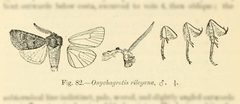
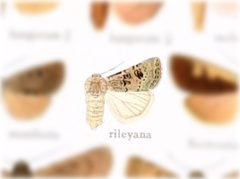
Agrotis rileyana is a of cutworm moth in the Noctuidae, described by Morrison in 1874. The species belongs to the Agrotis, a large group of noctuid commonly known as dart moths or cutworms whose larvae are significant agricultural pests. are active in late summer. The species is native to North America with records from the Canadian prairie provinces.
Pronunciation
How to pronounce Agrotis rileyana: //əˈɡroʊtɪs ˌraɪliˈænə//
These audio files are automatically generated. While they are not always 100% accurate, they are a good starting point.
Identification
can be distinguished from similar clearwing moth mimics by the combination of yellow banding on every abdominal segment and the red on the forewing. This full abdominal banding pattern is rare among Sesiidae mimics. The was historically confused with Synanthedon decipiens due to -mimic appearance, but differs in plant association and abdominal pattern. Larvae are distinguished from other cutworms by association with horse nettle host plants in sandy .
Images
Habitat
are associated with sandy areas around farm fields where larval plants grow. The inhabits agricultural landscapes and adjacent natural areas with suitable soil conditions for host plant establishment.
Distribution
North America: recorded from Alberta and Saskatchewan, Canada. The distribution corresponds to sandy agricultural regions of the northern Great Plains.
Seasonality
fly late in summer, with activity peaking in September. This timing corresponds to the second in areas with bimodal .
Host Associations
- Solanum carolinense - larval horse nettle, common in sandy spots around farm fields
Behavior
are active during daylight hours and visit flowers. Males use to locate females. The exhibits -mimicry and appearance, which provides protection from .
Ecological Role
Larval stage functions as a herbivore on Solanum . serve as when visiting flowers. The species participates in agricultural as prey for birds, , and other natural enemies.
Human Relevance
Larvae feed on horse nettle, a weedy plant in the nightshade , and are not considered significant agricultural pests of cultivated crops. The has minor importance as a subject of entomological study due to its effective mimicry and distinctive .
Similar Taxa
- Synanthedon decipiensBoth are -mimicking with similar appearance; distinguished by abdominal banding pattern (every segment in A. rileyana vs. different pattern in S. decipiens) and plant (oak galls for S. decipiens vs. horse nettle for A. rileyana)
- Agrotis ipsilonBoth are Agrotis cutworms with similar larval ; distinguished by appearance (A. rileyana has distinctive yellow abdominal banding and red ) and plant preferences
Misconceptions
The has been misidentified as a clearwing moth (Sesiidae) due to its effective mimicry and narrow wings. Historical records may confuse this species with Synanthedon decipiens or other wasp-mimicking Lepidoptera.
More Details
Taxonomic note
The authority is sometimes cited as Morrison, 1875 in some databases (NCBI), but the original description was published in 1874.
Sources and further reading
- BugGuide
- GBIF taxonomy match
- iNaturalist taxon
- NCBI Taxonomy
- Catalogue of Life
- Congrats to Antoine Abrieux, Innovator Fellow Award | Bug Squad
- Occasional Pests - AgriLife Extension Entomology
- Encyrtid Holdings | Entomology Research Museum
- Stem- and Leaf- Feeding Insects - AgriLife Extension Entomology
- Insect-resistant Maize Could Increase Yields and Decrease Pesticide Use in Mexico
- Wasp Wednesday—Not! | Beetles In The Bush