
Agrotis obliqua
Smith, 1903
Oblique Dart
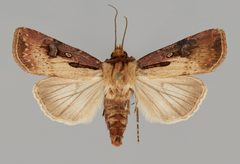
Agrotis obliqua is a noctuid native to North America, first described by Edgar Albert Smith in 1903. The has a wingspan of approximately 30 mm. are active in spring and early summer, with a single produced annually. It is found across a broad geographic range from Newfoundland to Vancouver Island, extending southward to Colorado, Arizona, and California.
Pronunciation
How to pronounce Agrotis obliqua: /əˈɡroʊtɪs əˈblɪkwə/
These audio files are automatically generated. While they are not always 100% accurate, they are a good starting point.
Identification
Wingspan of approximately 30 mm distinguishes it from larger Agrotis . The specific epithet 'obliqua' may refer to an oblique marking on the forewing, though this is not explicitly documented in available sources. active in spring and early summer, which may help separate it from some sympatric Agrotis species with different periods. Definitive identification requires examination of genitalia or reference to original description.
Images
Habitat
Specific preferences not documented. Based on distribution records, occurs in diverse environments across North America including , montane, and temperate regions.
Distribution
North America: Newfoundland to Vancouver Island, south to Colorado, Arizona, and California. Canadian provincial records include Alberta, Manitoba, and Saskatchewan.
Seasonality
on wing in spring and early summer. One per year ().
Life Cycle
One per year. stage not specified in available sources. Larval development presumably occurs following period in spring and early summer.
Behavior
activity typical of Noctuidae. Specific such as attraction to light, communication, or larval habits not documented in available sources.
Similar Taxa
- Agrotis ipsilonSympatric black cutworm with overlapping North American distribution; distinguished by larger size and different seasonal activity patterns
- Agrotis orthogoniaPale western cutworm with overlapping western North American range; differs in preference for loose, sandy soils and larval feeding habits
More Details
Original Description
First described by Edgar Albert Smith in 1903, with basionym Feltia obliqua.
Sources and further reading
- BugGuide
- Wikipedia
- GBIF taxonomy match
- iNaturalist taxon
- NCBI Taxonomy
- Catalogue of Life
- Outstanding PBS Deep Look Video: 'Why Do Sunflowers Face the Sunrise?' | Bug Squad
- Does Sneezeweed Make You Sneeze? | Bug Squad
- Congrats to Antoine Abrieux, Innovator Fellow Award | Bug Squad
- Occasional Pests - AgriLife Extension Entomology
- To Control Lekking Fruit Flies, Male Size Matters (Except When it Doesn't)
- Insect-resistant Maize Could Increase Yields and Decrease Pesticide Use in Mexico