
Dargida procinctus
(Grote, 1873)
Girdler Moth, Olive Green Cutworm
Dargida procinctus is a noctuid commonly known as the Girdler Moth or Olive Green . It occurs across western and central North America from the Canadian prairies to the southwestern United States. The has a wingspan of approximately 40 mm. Larvae feed primarily on grasses, with Phalaris arundinacea (reed canary grass) documented as a preferred .
Pronunciation
How to pronounce Dargida procinctus: /ˈdɑrɡɪdə proʊˈsɪŋktəs/
These audio files are automatically generated. While they are not always 100% accurate, they are a good starting point.
Identification
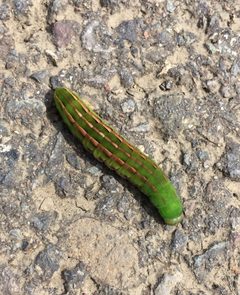
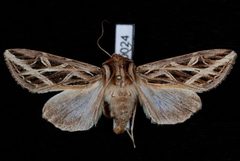
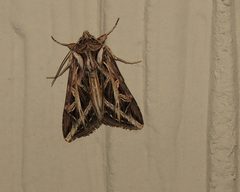
distinguished by yellow-brown forewings with a prominent lengthwise brown stripe. Similar to other Dargida (wheat armyworms), which share comparable size, coloration, and wing pattern. Definitive identification to species level may require examination of genitalia or dissection. Larvae resemble other slender, striped noctuid larvae but can be associated with adult identification through rearing.
Images
Habitat
Grassy areas, weedy fields, and agricultural lands where grasses occur. Associated with both native grasslands and disturbed including fields and field margins.
Distribution
North America: from Wisconsin and Manitoba west to British Columbia, south through the western United States to California and Arizona. Canadian records include Alberta, Manitoba, and Saskatchewan.
Seasonality
fly from August to September in northern portions of the range; activity occurs earlier in southern areas. Larval stage present during spring and early summer, with feeding damage most evident in late May through June.
Diet
Larvae feed on various grasses, primarily Phalaris arundinacea (reed canary grass). Feeding occurs on developing grain , with damage concentrated on kernels in the soft dough stage.
Host Associations
- Phalaris arundinacea - primary Reed canary grass; primary documented for larval feeding
Life Cycle
One per year. emerge in late summer and fall, with earlier in southern . laid in spring. Larvae feed through late spring and early summer, pupating in soil. Pupal stage lasts approximately 3-4 weeks before adult emergence.
Behavior
, attracted to lights. Larvae feed within wheat and grass seed heads, causing damage to developing kernels. Larval feeding is concentrated on the soft dough stage of grain development. often occur along field margins.
Ecological Role
Herbivore; larval feeding reduces seed production in grasses. May serve as prey for and , though specific documentation is lacking.
Human Relevance
Minor agricultural pest of wheat and other small grains. Larval feeding damage to grain can reduce yield, particularly in dryland fields and field margins. Damage often evident post-harvest as hollowed kernels. Pre-harvest interval restrictions limit treatment options. No established for this specifically.
Similar Taxa
- Dargida spp. (wheat head armyworms)Thirteen in Dargida share similar (yellow-brown coloration, lengthwise wing stripes) and larval appearance (slender, striped, greenish to tan). All species cause comparable damage to wheat . Definitive identification requires examination.
- Euxoa auxiliaris (army cutworm)Similar noctuid with brownish coloration and larval grass-feeding habit. larvae are surface feeders that clip plants at soil level, whereas D. procinctus larvae feed within seed .
More Details
Agricultural impact
Considered a minor pest compared to other . Damage is often noticed only after harvest when hollowed kernels become apparent. tend to be heavier in dryland wheat fields and along edges of irrigated fields.