
Admetovis similaris
Barnes, 1904
cutworm moth, dart moth
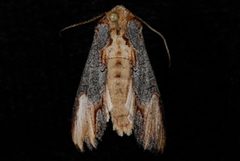
Admetovis similaris is a of or dart moth in the Noctuidae, first described by William Barnes in 1904. The species is found in North America. It belongs to the Admetovis, which contains three species characterized by distinctive flame-shaped forewing marks. Little is known about its specific , though larvae of related species are believed to be climbing cutworms that feed on woody shrubs.


Pronunciation
How to pronounce Admetovis similaris: /ædˈmiːtəvɪs sɪˈmɪlərɪs/
These audio files are automatically generated. While they are not always 100% accurate, they are a good starting point.
Identification
Admetovis similaris can be distinguished from congeneric by examining the flame-shaped mark on the forewing. Compared to Admetovis icarus, the mark is lighter in coloration. The wings are less mottled than those of A. icarus. Separation from Admetovis oxymorus requires careful comparison of wing pattern elements. Definitive identification may require reference to original description and due to historical misidentification issues within the .
Images
Distribution
North America. Specific records include the western United States and Canada, though precise range boundaries remain incompletely documented. The has been historically confused with related , complicating distribution mapping.
Similar Taxa
- Admetovis icarusShares the characteristic flame-shaped forewing mark, but A. icarus has a darker mark and more mottled wings, and occurs at higher elevations (above 2,800 m). A. similaris has been misidentified as this in past collections.
- Admetovis oxymorusCongeneric with similar overall appearance; larvae are believed to be climbing cutworms feeding on woody shrubs. Historical misidentifications between these species have occurred.
More Details
Taxonomic History
The Admetovis was revised in 2018 by Crabo and Schmidt, who described A. icarus as new and clarified boundaries. Prior to this revision, specimens of A. similaris had been misidentified as A. oxymorus. The name 'similaris' likely refers to the species' resemblance to other members of the genus or related noctuids.
Research Needs
The larval of A. similaris remains unknown. Based on related , larvae are suspected to be climbing cutworms feeding on woody shrubs, but this requires confirmation through field observation and rearing studies.