
Admetovis
Grote, 1873
Species Guides
2- Admetovis oxymorus(cutworm moth)
- Admetovis similaris(cutworm moth)
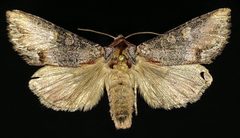
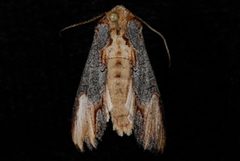
A of medium-sized noctuid found in western North America. are characterized by gray forewings with a distinctive flame-shaped mark. The genus contains three : A. oxymorus, A. similaris, and A. icarus. Recent revision based on barcode data and genitalia reclassified the genus from Orthosiini to Hadenini.
Pronunciation
How to pronounce Admetovis: //ˌæd.məˈtoʊ.vɪs//
These audio files are automatically generated. While they are not always 100% accurate, they are a good starting point.
Identification
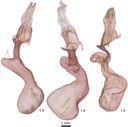
Medium-sized with forewing length 17–21 mm. Gray forewings bear a characteristic flame-shaped mark. are densely hairy. Distinguished from related by the combination of the flame mark, hairy eyes, and late spring to summer period. Male and female genitalia provide definitive identification; an identification key is available for the three .
Images
Habitat
Montane environments in western North America, from 732 m to 2896 m elevation. Found in mountainous regions from the Rocky Mountains and Arizona-Mexico border west to the Pacific Coast.
Distribution
Western North America from southern British Columbia south through Washington, Oregon, and California to the Rocky Mountains and Arizona-Mexico border. Mexican distribution unknown.
Seasonality
fly from February through August depending on and locality. A. similaris flies earliest (February in Southwest deserts), while A. icarus and A. oxymorus fly later (late spring through summer, June–July).
Diet
Larvae are climbing cutworms that feed on woody shrubs. This is documented for A. oxymorus and inferred for A. icarus based on phylogenetic proximity.
Life Cycle
are and attracted to light. Larval is poorly known; no detailed plant records or pupal descriptions available.
Behavior
; are readily attracted to light. period differs from most Orthosiini, emerging in late spring through summer rather than early spring.
Similar Taxa
- OrthosiiniFormerly classified in this tribe, but distinguished by later period (late spring-summer vs. early spring ) and reassigned to Hadenini based on and genitalia .
- Admetovis oxymorusA. icarus was previously misidentified as this ; distinguished by darker flame mark and more mottled wings.