
Protorthodes ustulata
Lafontaine, Walsh & Ferris, 2014
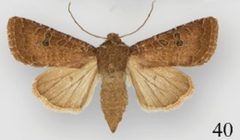
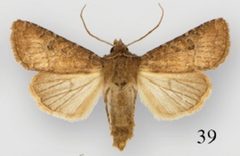
Protorthodes ustulata is a small noctuid described in 2014, distinguished by its burnt-orange forewings with contrasting gray-white markings. The inhabits arid and semi-arid regions of the southwestern United States and northern Mexico. are active during two distinct periods: spring and late summer through early autumn.
Pronunciation
How to pronounce Protorthodes ustulata: /proʊtɔːrˈθoʊdiːz ˌʌstjʊˈleɪtə/
These audio files are automatically generated. While they are not always 100% accurate, they are a good starting point.
Identification
The eight-shaped spot with contrasting whitish-gray outline is distinctive. The burnt-orange ground color combined with the specific pattern of gray-white lines separates it from other Protorthodes . The darker coloration toward the costal and outer edges of the forewing is a helpful field mark.
Images
Habitat
Arid and semi-arid environments including grasslands, scrublands, and open woodlands. The has been documented in foothill and mountain from Wyoming southward through the southwestern United States.
Distribution
North America: south-eastern Wyoming south to the Guadalupe Mountains in western Texas, westward to central and south-eastern Arizona, and into northern Mexico.
Seasonality
on wing early April to mid-May, and again early August to early October. Bimodal pattern suggests two per year.
Similar Taxa
- Other Protorthodes speciesSimilar size and general Noctuidae ; distinguished by the unique burnt-orange coloration and eight-shaped spot pattern of P. ustulata
More Details
Etymology
The specific epithet ustulata refers to the burnt-orange color of the body and forewings, derived from Latin ustulata meaning 'burnt' or 'scorched'.
Taxonomic history
Originally described in the Trichopolia, subsequently transferred to Protorthodes. Catalogue of Life lists Trichopolia ustulata as a synonym, though GBIF recognizes Protorthodes ustulata as the accepted name.