
Protorthodes antennata
(Barnes & McDunnough, 1912)
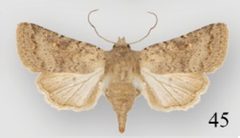
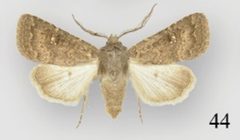
Protorthodes antennata is a small noctuid described in 1912 by Barnes and McDunnough. It is distinguished from by its unique spot pattern lacking a dark outline. The has a restricted range in the southwestern United States and northern Mexico, with active in spring and fall.
Pronunciation
How to pronounce Protorthodes antennata: /pɹoʊˈtɔrθoʊdiːz ænˈtɛnnɑːtə/
These audio files are automatically generated. While they are not always 100% accurate, they are a good starting point.
Identification
Distinguished from other Protorthodes by the un-outlined spot on forewings; typically show dark outlining of this spot. The combination of tiny white dots partially defining the reniform spot and tiny yellow dots forming a partial outer border is diagnostic. Small size (10–14 mm forewing length) and spring/fall period further aid identification.
Images
Distribution
Central Arizona to northernmost Mexico; restricted range in southwestern North America
Seasonality
recorded on wing from mid-May to mid-June and in October; or partially bivoltine pattern with spring and fall periods
Similar Taxa
- Other Protorthodes speciesSimilar general appearance but distinguished by outlined spot; P. antennata uniquely lacks dark outlining
- Trichopolia spp.Formerly classified in this ; now separated based on genitalic and spot pattern differences