
Lasionycta uniformis
(Smith, 1893)
Lasionycta uniformis is a in the Noctuidae, first described by Smith in 1893. The species exhibits a disjunct distribution across montane regions of western North America, ranging from southern Yukon to northern California and Colorado, with an isolated eastern in the Gaspé Peninsula of Quebec. Five have been recognized, differentiated primarily by geographic range and subtle morphological variation. are active during mid-summer.

Pronunciation
How to pronounce Lasionycta uniformis: /ˌlæsi.oʊˈnɪktə ˌjuːnəˈfɔːrmɪs/
These audio files are automatically generated. While they are not always 100% accurate, they are a good starting point.
Identification
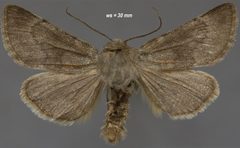
Distinguished from other Lasionycta by the combination of uniform coloration (lacking strong pattern elements), montane preference, and specific geographic distribution. The five described (uniformis, multicolor, fusca, shasta, handfieldi) show subtle differences in coloration and pattern intensity, with L. u. multicolor exhibiting more pronounced color variation than the nominate subspecies. Accurate identification to subspecies level requires examination of type localities and reference to the original revision by Lafontaine and Schmidt (2010).
Images
Habitat
Montane environments in western North America, primarily in mountainous terrain. Occurs in subalpine and alpine zones of the Rocky Mountains, Coast Range, Cascades, and associated mountain systems. The isolated Quebec occupies Mount Albert in the Gaspé Peninsula.
Distribution
Western North America from southern Yukon through British Columbia, Washington, Oregon, northern California, and eastward to Colorado. Specific documented locations include: Rocky Mountains and Purcell Mountains of British Columbia (nominate ); Montana Mountain in southwestern Yukon south through British Columbia Coast Range to southern Washington Cascades (subspecies multicolor); central Colorado, northern Utah, and Beartooth Plateau on Wyoming-Montana border (subspecies fusca); Mount Shasta in northern California Cascade Range (subspecies shasta); and Mount Albert, Gaspé Peninsula, Quebec (subspecies handfieldi).
Seasonality
on wing from early July to late August. period corresponds to mid-summer conditions in montane .
Similar Taxa
- Other Lasionycta speciesThe Lasionycta contains 43 recognized in North America; L. uniformis is distinguished by its relatively uniform wing pattern and specific montane distribution. The 2010 revision by Lafontaine and Schmidt provides diagnostic keys separating L. uniformis from .
More Details
Subspecies differentiation
The five are primarily and distinguished by geographic origin and subtle color variation. Subspecies multicolor shows greater color than other forms; subspecies shasta may be more widely distributed in the southern Cascades and Klamath Mountains than currently documented.
Taxonomic history
Originally described as Scotogramma uniformis by Smith in 1893, transferred to Lasionycta following the comprehensive revision of the by Lafontaine and Schmidt (2010) published in ZooKeys.