
Lacinipolia vicina
(Grote, 1874)
Vicina Dart
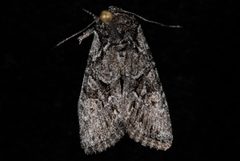
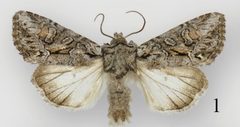
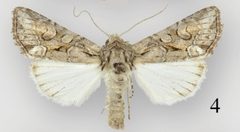
Lacinipolia vicina is a small owlet moth in the Noctuidae, commonly known as the Vicina Dart. It is found in the eastern United States, with records from Massachusetts, New York, Pennsylvania, Virginia, North Carolina, New Jersey, and possibly Indiana. The has two per year, with active in spring and fall. The larvae are believed to be ground dwellers.
Pronunciation
How to pronounce Lacinipolia vicina: /lɑːˈkɪnɪpoʊliə vɪˈsaɪnə/
These audio files are automatically generated. While they are not always 100% accurate, they are a good starting point.
Identification
Lacinipolia vicina cannot be reliably distinguished from other Lacinipolia by external appearance alone. Accurate identification requires examination of genitalia or molecular analysis. The species is part of a containing numerous similar-looking species, many of which require taxonomic expertise to differentiate. The forewing length of 14–16 mm and the documented eastern North American distribution can help narrow possibilities, but definitive identification should be confirmed through dissection or .
Images
Habitat
Specific details are not well documented for this . Based on the and the observation that green-colored individuals likely rest on lichen-covered tree trunks, the species probably occupies wooded or forested environments. The larval stage is described as ground-dwelling, suggesting terrestrial habitats with suitable plants.
Distribution
Eastern United States: Massachusetts, New York, Pennsylvania, Virginia, North Carolina, New Jersey, and possibly Indiana. GBIF records also indicate presence in Alberta, Manitoba, and Saskatchewan, Canada, though these may represent vagrants or require verification.
Seasonality
have been recorded on wing from April to May and September to October, indicating two per year ().
Life Cycle
The has two per year (). Larvae are believed to be ground dwellers, though specific plants have not been documented. The complete from through larval instars to and has not been described in detail.
Behavior
are attracted to black lights, a common among noctuid . They are . Green-colored individuals likely rest on lichen-covered tree trunks during daylight hours, using camouflage to avoid . The exhibits two distinct periods corresponding to spring and fall .
Ecological Role
As a member of the Noctuidae , the larvae likely function as herbivores, consuming various plant materials. may serve as prey for including bats, birds, and other insects. The contributes to nutrient cycling through larval feeding and adult-adult interactions in the .
Human Relevance
No direct economic or medical significance is documented. The may be encountered by entomologists during surveys and black-lighting events. Like many noctuid moths, it is part of the broader biodiversity of eastern North American forests.
Similar Taxa
- Other Lacinipolia speciesNumerous congeneric share similar size, coloration, and wing patterns; require genitalia examination or molecular methods for reliable differentiation
- Other Noctuinae mothsSmall owlet moths in the Noctuinae often exhibit convergent ; Lacinipolia vicina specifically distinguished by genitalia structure and geographic distribution
More Details
Taxonomic History
Originally described as Mamestra vicina by Grote in 1874, later transferred to the Lacinipolia. The genus Lacinipolia has undergone taxonomic revision, with many historically difficult to distinguish based on external alone.
Research Needs
Basic biological information remains poorly known, including specific larval plants, detailed requirements, and precise geographic range boundaries. The Canadian records (Alberta, Manitoba, Saskatchewan) may represent misidentifications, vagrant individuals, or a broader range than currently recognized, and warrant verification.
Sources and further reading
- BugGuide
- Wikipedia
- GBIF taxonomy match
- iNaturalist taxon
- NCBI Taxonomy
- Catalogue of Life
- Primary Type List | Entomology Research Museum
- Bug Eric: My Personal National Moth Week, 2017
- Advanced Mass Spectrometry Method Could Give Forensic Entomologists Faster Fly IDs
- Bug Eric: September 2017
- anurans | Blog
- frogs | Blog