
Lacinipolia laudabilis
(Guenée, 1852)
Laudable Arches Moth, Laudable Arches
Lacinipolia laudabilis, commonly known as the Laudable Arches , is a small noctuid moth with a wingspan of 20–28 mm. are active year-round and are attracted to light. The exhibits color variation, with individuals ranging from mottled gray with reflective wing to green coloration. The larvae feed on herbaceous plants. The species is native to North and Central America but has been recorded in Great Britain, likely through accidental importation or rare immigration.
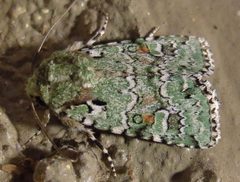
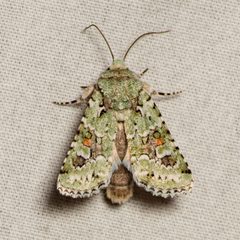
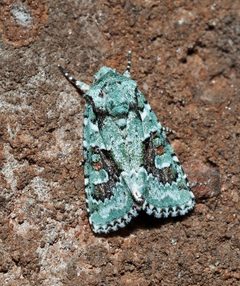
Pronunciation
How to pronounce Lacinipolia laudabilis: /læˌsɪnɪˈpoʊliə lɔˈdæbɪlɪs/
These audio files are automatically generated. While they are not always 100% accurate, they are a good starting point.
Identification
in the Lacinipolia are difficult to distinguish visually; identification typically requires examination of genitalia. L. laudabilis can be separated from other Lacinipolia species by subtle differences in wing pattern and, definitively, by dissection and comparison of male or female genitalia. The green color morph may be confused with other green noctuids but is not diagnostic to species level.
Images
Appearance
Small with wingspan 20–28 mm. Forewings show variable coloration: some individuals are mottled gray with reflective , others are green. The green morph likely provides camouflage against lichen-covered substrates.
Habitat
Associated with diverse environments supporting herbaceous vegetation. frequent areas near larval plants. Specific microhabitat preferences for larvae are undocumented.
Distribution
Native to North America: recorded from Alabama, California, Florida, Georgia, Kentucky, Maryland, Massachusetts, North Carolina, Oklahoma, Pennsylvania, South Carolina, Tennessee, Texas, and Virginia. Also occurs in Mexico and Rica. Introduced or vagrant in Great Britain, where records are sparse and origin uncertain.
Seasonality
active year-round; no specific seasonal peak documented. Continuous pattern suggests multiple or extended period in suitable climates.
Diet
Larvae feed on various herbaceous plants. Specific plant records are not detailed in available sources.
Life Cycle
Complete with , larval, pupal, and stages. Larvae are herbivorous on herbaceous vegetation. Adult longevity and number of per year are not documented.
Behavior
; attracted to artificial light sources. Green morph individuals likely rest on lichen-covered tree trunks during daylight hours for camouflage. Specific mating or oviposition are not documented.
Ecological Role
Larvae function as herbivores on herbaceous plants. may serve as prey for including bats and birds. Specific ecological interactions are not documented.
Human Relevance
No significant economic or medical importance. Occasionally encountered by enthusiasts at light traps. British records suggest potential for accidental transport via commerce.
Similar Taxa
- Lacinipolia renigeraOverlapping geographic range and similar size; requires genitalia examination for definitive separation
- Lacinipolia olivaceaGreen color morph of L. laudabilis may resemble this ; genitalia dissection needed for confirmation
- Other Lacinipolia species contains numerous similar small noctuids with variable forewing patterns; -level identification challenging without dissection
More Details
Taxonomic Note
Originally described as Hecatera laudabilis by Guenée in 1852, later transferred to Lacinipolia.
Identification Challenge
The Lacinipolia is taxonomically difficult; many are distinguished primarily by genitalia characters rather than external . This has led to potential misidentifications in museum collections and citizen science records.