
Hecatera
Guenée, 1852
Species Guides
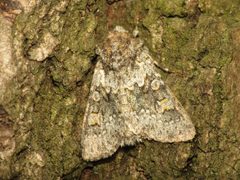
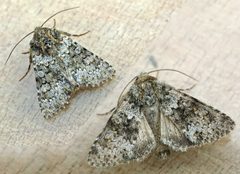
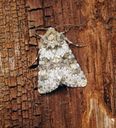
1- Hecatera dysodea(Small Ranunculus)
Hecatera is a of in the Noctuidae, established by Achille Guenée in 1852. The genus comprises approximately 16 described distributed primarily across the Palearctic region, with some species extending into North America. The most extensively documented species, Hecatera dysodea (Small Ranunculus), has been the subject of genomic research and serves as a representative for understanding the genus's .
Pronunciation
How to pronounce Hecatera: /hɛˈkæ.tɪ.rə/
These audio files are automatically generated. While they are not always 100% accurate, they are a good starting point.
Images
Habitat
Rough, open ground including brownfield sites and gardens. Specific associations are best documented for Hecatera dysodea; other likely occupy similar open, disturbed habitats but detailed habitat data for most species is lacking.
Distribution
Palearctic region, with records from Denmark, Norway, and Sweden confirmed. Hecatera dysodea naturally occurs across Central and Southern Europe and Central Asia, and has been accidentally introduced to the USA where it is now widespread in the Pacific Northwest. In Britain, H. dysodea underwent local extinction around the 1930s and was rediscovered in Kent in 1997, now widespread in England and parts of Wales.
Seasonality
Hecatera dysodea are on the wing from May to October, with two overlapping reported. Seasonality data for other in the is not well documented.
Diet
Larvae of Hecatera dysodea feed on seeds and flowers of lettuces, primarily Prickly Lettuce (Lactuca serriola), and other lettuce including cultivated varieties. Dietary information for other Hecatera species is not available.
Host Associations
- Lactuca serriola - larval food plantPrickly Lettuce; primary for Hecatera dysodea
- Lactuca sativa - larval food plantcultivated lettuce; consumed by Hecatera dysodea larvae
Life Cycle
Hecatera dysodea has two overlapping , though some sources report a single generation. Other details for the are not documented.
Behavior
of Hecatera dysodea visit flowers, especially of lettuces, and are readily attracted to light. Chemical attractants are used in the USA to monitor and potentially control .
Ecological Role
Hecatera dysodea acts as a potential pest of lettuce seed crops due to larval feeding on seeds and flowers of bolted lettuces.
Human Relevance
Hecatera dysodea has economic significance as a pest of lettuce , particularly seed crops. The has been the subject of genomic sequencing (640.9 Mb assembly) to support research and potential management strategies. Its history of extinction and recolonization in Britain has made it a subject of conservation interest.
Similar Taxa
- Other Noctuinae generaHecatera share the general appearance of medium-sized noctuid with patterned forewings; precise identification requires examination of genitalia or molecular markers
More Details
Genomic resources
The of Hecatera dysodea has been sequenced from a female specimen, yielding a 640.9 Mb nuclear assembly with 32 chromosomal pseudomolecules including Z and W , and a 15.4 kb mitochondrial genome with 12,213 protein-coding genes annotated.
Etymology
The epithet 'dysodea' is thought to derive from Greek roots referring to 'ill-smelling', possibly alluding to the odor of larvae feeding on bolting lettuce plants.