
Elaphria exesa
Guenée, 1852
Exesa Midget Moth
Elaphria exesa, commonly known as the Exesa Midget , is a of or dart moth in the Noctuidae. It was first described by Guenée in 1852. The species is native to North America and is attracted to blacklight, a common method for observing moths. It is assigned Hodges number 9682 in the North American moth numbering system.
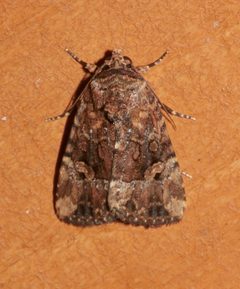
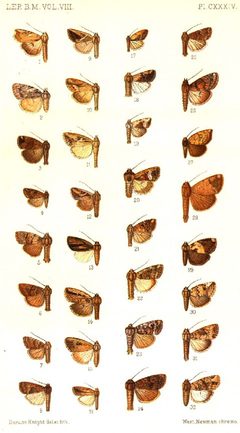
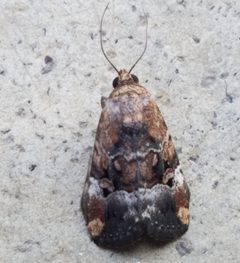
Pronunciation
How to pronounce Elaphria exesa: /ɛˈlæf.ri.ə ɛkˈsiːsə/
These audio files are automatically generated. While they are not always 100% accurate, they are a good starting point.
Identification
As a member of the Elaphria, this belongs to a group commonly referred to as "midget moths" due to their relatively small size compared to other noctuids. Specific diagnostic features distinguishing E. exesa from such as E. grata (the Grateful Midget) are not documented in available sources. Identification to species level likely requires examination of genitalia or reference to regional guides.
Images
Distribution
North America. Specific regional distribution details beyond continental presence are not documented in available sources.
Seasonality
Has been observed at blacklight in late October, suggesting activity extends into autumn. More precise phenological data is not available.
Behavior
are and attracted to artificial light sources, including blacklights. This has been documented during autumn blacklighting sessions in North America.
Human Relevance
Documented in citizen science platforms including iNaturalist, with over 250 observations recorded. The has a designated Hodges number (9682) used in North American identification systems.
Similar Taxa
- Elaphria grataAlso a "midget " in the same , with similar structure (Grateful Midget vs. Exesa Midget), requiring careful differentiation
More Details
Nomenclature
Originally described as Celaena exesa Guenée, 1852; later transferred to Elaphria. The basionym Celaena exesa reflects historical classification within Noctuidae.
Taxonomic Numbering
Assigned MONA ( of North America) or Hodges number 9682, a standardized identifier used in North American lepidopteran and field guides.