
Papaipema stenocelis
Dyar, 1907
Chain Fern Borer Moth, chain fern borer
Papaipema stenocelis, known as the chain fern borer , is a noctuid moth native to North America. The is a member of the Papaipema, a group of borers that specialize in feeding internally on the stems and roots of ferns and other plants. Its references its association with chain ferns (Woodwardia spp.). The species was described by Harrison Gray Dyar in 1907.
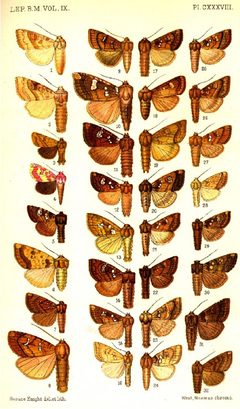
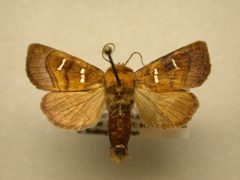
Pronunciation
How to pronounce Papaipema stenocelis: /ˌpæpaɪˈpiːmə stɛnəˈsiːlɪs/
These audio files are automatically generated. While they are not always 100% accurate, they are a good starting point.
Identification
As a member of Papaipema, this likely exhibits the -characteristic dull, mottled brown or gray coloration that provides camouflage against bark and leaf litter. may be distinguished from other noctuids by genitalic examination. The specific epithet "stenocelis" (meaning "narrow ") may reference a wing venation character. Accurate identification to species level typically requires dissection and comparison with reference specimens.
Images
Habitat
Associated with wetlands and moist woodland where ferns occur. Chain ferns (Woodwardia spp.) typically grow in swamps, wet meadows, and along stream banks.
Distribution
North America. Specific range details are poorly documented, but the presumably occurs where chain ferns (Woodwardia) are present, including eastern and central regions of the United States and potentially southern Canada.
Diet
Larvae bore into the stems or rhizomes of chain ferns (Woodwardia spp.).
Host Associations
- Woodwardia - larval Chain ferns; specific not confirmed
Life Cycle
Complete with , larva, pupa, and stages. Larvae are internal borers in fern stems or rhizomes. presumably occurs in the soil or within the plant. Adults are .
Behavior
are and attracted to light. Larvae are concealed feeders, boring into fern tissues.
Ecological Role
As a herbivore, larvae may influence fern in localized areas. The serves as prey for and , though specific relationships are undocumented.
Human Relevance
No significant economic or medical importance. Of potential interest to lepidopterists and wetland ecologists as an indicator of healthy fern .
Similar Taxa
- Other Papaipema speciesMany are morphologically similar and require genitalic dissection for reliable identification; some feed on different fern or other plants
- Other Noctuinae borersSimilar size and cryptic coloration; Papaipema distinguished by larval and subtle characters
More Details
Taxonomic History
Described by Harrison Gray Dyar in 1907. The specific epithet "stenocelis" derives from Greek "stenos" (narrow) and "kelis" (), likely referring to a character in the wing venation or genitalia.
Conservation Status
Not formally assessed; likely vulnerable to wetland loss and degradation of fern .