
Papaipema silphii
Bird, 1915
Silphium Borer Moth, silphius borer moth
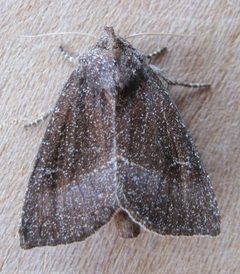
Papaipema silphii, commonly known as the Silphium Borer , is a noctuid moth described by Bird in 1915. It belongs to the Papaipema, a group of moths whose larvae are specialized borers in the stems and roots of herbaceous plants. The species is found in North America and is associated with plants in the genus Silphium. The species has been assigned Hodges number 9498 in the North American moth numbering system.
Pronunciation
How to pronounce Papaipema silphii: /pəˌpaɪˈpiːmə ˈsɪl.fi.aɪ/
These audio files are automatically generated. While they are not always 100% accurate, they are a good starting point.
Identification
in the Papaipema are distinguished from other Noctuidae by their specialized larval as stem and root borers in herbaceous plants, though identification to species level requires examination of genitalia or association with plants. Papaipema silphii specifically is associated with Silphium host plants. Adults are medium-sized noctuid with typical dull coloration; precise diagnostic features separating P. silphii from are not documented in available sources.
Images
Habitat
Associated with prairie and grassland where plants of the Silphium occur. The has been documented in northwestern Missouri, suggesting occurrence in tallgrass prairie regions of the central United States.
Distribution
North America. Documented occurrences include the central United States, specifically northwestern Missouri. The full extent of its range within North America is not precisely documented in available sources.
Seasonality
activity period is not precisely documented. A larva of a related (Antistrophus lygodesmiaepisum) associated with Silphium was photographed in late June in northwestern Missouri, suggesting potential seasonal overlap, though this refers to a different .
Diet
Larvae bore into stems of Silphium (wholeleaf rosinweed, Silphium integrifolium, and related species). The specific feeding habits of are not documented.
Host Associations
- Silphium integrifolium - larval wholeleaf rosinweed; larvae bore in stems
- Silphium - larval -level association; specific not fully documented
Life Cycle
Complete with , larva, pupa, and stages. Larvae are stem borers in Silphium plants. Specific details of site, stage, and number of per year are not documented.
Behavior
Larvae exhibit stem-boring in plants, tunneling within stems. behavior patterns including period, mating, and oviposition specifics are not documented.
Ecological Role
As a stem-boring herbivore, larvae likely influence plant growth and resource allocation in Silphium . The may serve as prey for and other natural enemies, though specific documentation is lacking.
Human Relevance
No significant documented economic or cultural importance. The may be of interest to prairie conservation efforts due to its association with native Silphium species in threatened tallgrass prairie .
Similar Taxa
- Papaipema nebrisAnother Papaipema with stem-boring larvae; requires genital dissection or plant association for reliable separation
- Papaipema eryngiiShares and similar borer ; plant on Eryngium versus Silphium provides distinguishing ecological characteristic
- Antistrophus lygodesmiaepisumNot a but a cynipid ; forms galls on Silphium stems and has been confused in identification challenges due to shared plant and
More Details
Hodges Number
The is assigned MONA ( of North America) or Hodges number 9498, used in North American lepidopteran identification systems.
Taxonomic History
Described by Bird in 1915. The specific epithet 'silphii' reflects its association with Silphium plants.