
Papaipema rigida
Grote, 1877
rigid sunflower borer, Joe-Pye Weed and Rigid Sunflower Borer Moth
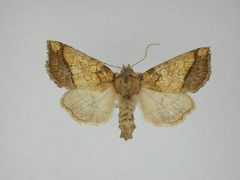
Papaipema rigida is a noctuid commonly known as the rigid sunflower borer. The is native to North America and is one of approximately 50 species in the Papaipema, a group of borers specialized on herbaceous plants. The references its association with rigid sunflower (Helianthus rigida) and related composite plants. The species was described by Augustus Radcliffe Grote in 1877.
Pronunciation
How to pronounce Papaipema rigida: //pəˌpaɪˈpiːmə ˈrɪdʒɪdə//
These audio files are automatically generated. While they are not always 100% accurate, they are a good starting point.
Identification
Members of Papaipema are distinguished from other noctuid by their specialized as borers in the stems and roots of living herbaceous plants. Within the , are typically distinguished by plant association and genitalia . The specific epithet 'rigida' refers to the rigid sunflower, its primary host. are medium-sized noctuid moths with relatively nondescript brownish coloration typical of the .
Images
Habitat
Associated with open supporting of composite plants in the tribe Heliantheae, particularly rigid sunflower (Helianthus rigida) and Joe-Pye weed (Eutrochium/Eupatorium ). These include prairies, meadows, open woodlands, and disturbed areas where plants grow.
Distribution
North America. Documented from Canada (Manitoba, Saskatchewan) and the United States (Vermont, with broader distribution inferred from plant range and -level patterns).
Diet
Larval stage feeds internally as a borer in stems and roots of living plants, specifically rigid sunflower (Helianthus rigida) and Joe-Pye weed (Eutrochium/Eupatorium ). do not feed.
Host Associations
- Helianthus rigida - larval primary , gives its
- Eutrochium - larval Joe-Pye weed
- Eupatorium - larval historical placement for some plants
Life Cycle
Complete with , larva, pupa, and stages. Larvae are stem and root borers in living plants. occurs in the soil or within the host plant material. Adults are active in late summer and fall, with timing corresponding to host plant .
Behavior
Larvae bore into stems and roots of living plants, remaining concealed within plant tissue. are and attracted to light. The Papaipema exhibits specialized host fidelity, with individual typically restricted to particular host plant genera or species.
Ecological Role
Human Relevance
Not of direct economic importance. The Papaipema has been studied for conservation purposes, as many are dependent on native prairie that have declined significantly. May be of interest to lepidopterists and prairie restoration ecologists.
Similar Taxa
- Papaipema nebrisAnother sunflower-associated borer in the same ; distinguished by plant preferences and geographic distribution
- Papaipema pterisiiBracken borer in same ; distinguished by plant (bracken fern vs. composites)
- Other Papaipema species contains ~50 , most distinguished by plant specialization and subtle morphological differences in genitalia
More Details
Taxonomic history
Originally described as Gortyna rigida by Grote in 1877, later transferred to Papaipema. The Papaipema was established by Grote in 1881.
Conservation context
in the Papaipema are increasingly recognized as indicators of native prairie and wetland quality due to their specialized plant relationships and sensitivity to habitat fragmentation and plant encroachment.
Collection records
GBIF records indicate presence in Manitoba, Saskatchewan, and Vermont, with the likely more widespread across the northern and central United States where suitable plants occur.