
Papaipema cataphracta
Grote, 1864
burdock borer
Pronunciation
How to pronounce Papaipema cataphracta: //pəˌpaɪˈpiːmə ˌkætəˈfræktə//
These audio files are automatically generated. While they are not always 100% accurate, they are a good starting point.
Identification
Distinguished from other Papaipema by plant association and geographic range. period (August–October) overlaps with several ; larval boring in roots and stems of burdock and lilies is diagnostic. Genitalia examination may be required for definitive identification.
Images
Appearance
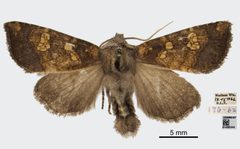
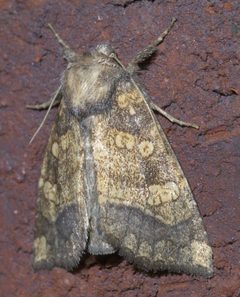
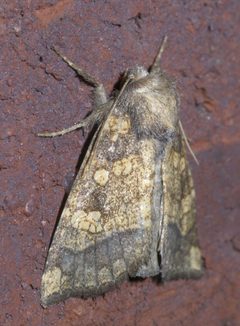
Medium-sized with wingspan 29–45 mm. Forewings brownish with variable patterning; hindwings lighter. not prominently described in sources.
Habitat
Associated with plant stands: burdock patches, lily , and thistle meadows. Found in open, disturbed including roadsides, fields, and woodland edges where host plants grow.
Distribution
Eastern and central North America: Quebec and Maine south to Florida, west to Louisiana, north to Saskatchewan. Present in Canadian provinces of Manitoba and Saskatchewan.
Seasonality
fly from August to October, with timing varying by latitude. Single brooded.
Diet
Larvae bore into roots and stems of plants: Arctium (burdock), Lilium (lilies), and thistles (Cirsium and related ). feeding habits not documented in sources.
Host Associations
- Arctium - larval roots and stems
- Lilium - larval roots and stems
- Thistles - larval roots and stems; likely Cirsium and related
Life Cycle
Complete . Larvae bore into roots and stems of plants. likely occurs in soil or within host plant remains; specific details of stage not documented in sources.
Behavior
Larvae are specialized borers, tunneling into root crowns and lower stems of plants. are and attracted to light.
Ecological Role
Herbivore; larval boring may weaken or kill plant individuals. Role in not documented.
Human Relevance
Minor potential as pest of ornamental lilies. reflects association with burdock, a widespread weed.
Similar Taxa
- Other Papaipema speciesMany share similar and late-season period; require genitalia dissection or larval plant association for separation
More Details
Taxonomic Note
Originally described as Gortyna cataphracta by Grote in 1864; later transferred to Papaipema.