
Papaipema aweme
Lyman, 1908
Aweme borer moth, Bogbean Borer Moth, small white-aster moth
Papaipema aweme is a noctuid described by Lyman in 1908. It belongs to the Papaipema, a group of stem-boring moths whose larvae tunnel into the roots and stems of herbaceous plants. The is known from limited observations in North America, with confirmed records from Manitoba and Saskatchewan in Canada. It is assigned MONA/Hodges number 9504.
Pronunciation
How to pronounce Papaipema aweme: //pæˌpaɪˈpiːmə əˈweɪmi//
These audio files are automatically generated. While they are not always 100% accurate, they are a good starting point.
Identification
As a member of Papaipema, likely exhibit the -characteristic dull coloration and robust body form typical of noctuid borers. Specific diagnostic features distinguishing P. aweme from congeneric such as P. pterisii or P. nebris are not documented in available sources. Identification to species level may require examination of genitalia or larval association.
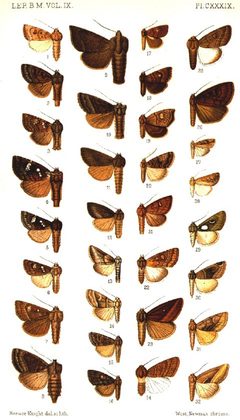
Images
Habitat
Associated with wetland or bog environments based on the "Bogbean Borer ," suggesting larval development in bogbean (Menyanthes trifoliata) or similar wetland vegetation.
Distribution
North America; confirmed present in Manitoba and Saskatchewan, Canada. Distribution details beyond these provinces are not substantiated in available records.
Host Associations
- Menyanthes trifoliata - probable larval Inferred from "Bogbean Borer "; direct documentation not located
Similar Taxa
- Papaipema pterisiiOverlapping geographic range and similar borer ; distinguished by plant association and subtle morphological differences in genitalia
- Papaipema nebrisCongeneric stem-borer with similar ; P. nebris is a significant agricultural pest of corn, whereas P. aweme appears restricted to native wetland
More Details
Nomenclature
Originally described as Gortyna aweme by Lyman in 1908; later transferred to Papaipema. The epithet "aweme" refers to the type locality at Aweme, Manitoba.
Observation scarcity
Only 7 observations recorded in iNaturalist as of source date, indicating the is rarely encountered or underreported, possibly due to specialized requirements and cryptic .